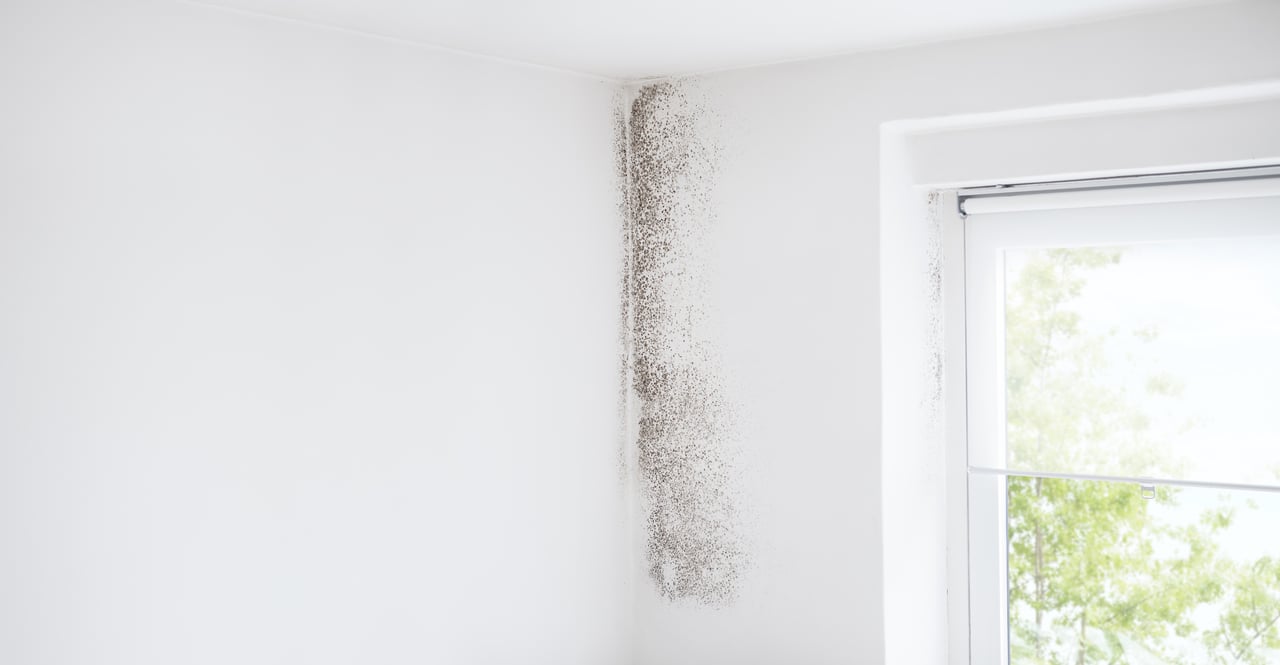
This summer we closed on a new construction home. The buyers were excited. They had purchased their first home, and because it was new, they were expecting less maintenance and a little more carefree ownership. They closed, headed to Europe for vacation…and within a few weeks, the person checking on their house found something. Mold.
It had grown along the baseboards across the basement. Was it humid? Absolutely. It was a midwestern summer, after all. And yes, not having a dehumidifier certainly could have contributed. But mold growing that quickly, and that broadly, made me wonder if there was something bigger going on.
A few days later, while enjoying my morning espresso, I opened the weekend newspaper and came across a Wall Street Journal headline that immediately caught my attention, “Mold Is Driving America’s Homeowners Crazy.”
The article explores a growing number of mold-related lawsuits involving newer homes, but the part that interested me most was not the litigation. It was the building science. Because, as it turns out, in our push to make homes more efficient, we’ve also engineered them to behave very differently than they used to.
So why is this new? Well, old homes were leaky. That was terrible for energy efficiency. Heated and cooled air escaped through walls, windows, attics and countless little gaps in the building envelope. But strangely, that leakage also helped when it came to moisture.
See, air naturally moved through wall assemblies, attics, basements and around windows whether we wanted it to or not. So if a little moisture found its way somewhere it shouldn't, the house often had more opportunity to dry out.
But, today's homes are different. We are building tighter envelopes. Adding more insulation, installing better windows, air sealing more aggressively, paying greater attention to vapor control and using increasingly sophisticated HVAC systems and heat pumps. To be clear, those are all really, really good things.
But there is a tradeoff: a modern house has much less tolerance for mistakes to correct themselves. Which made me wonder, “did we make homes too efficient?"
Before the comments arrive, no—I don't think energy efficiency is bad. Quite the opposite as if I was building today, I’d want to improve all those things on my ’next’ house. In fact, I’m currently upgrading my existing home to include a lot of these missing features, known in the industry as “high performing homes’". But our transition from the old "leaky house" to today's higher-performance house means the way we build and operate homes has to evolve with it. We can't dramatically tighten a house and then build everything else exactly the way we did in the 1990s.
A few construction things to consider:
- Window flashing and waterproofing: A small installation mistake matters more when moisture enters an assembly that has limited ability to dry. Windows, doors, siding transitions, roof penetrations and flashing details may not be the glamorous parts of a house, but they are some of the most important. The expensive failures in a home are often the ones hidden behind the drywall.
- HVAC Sizing: Bigger isn't better because an oversized air-conditioning system may cool a house very quickly, which sounds great, but shorter run times can mean the system doesn't remove enough humidity from the air. The result can be a cool house that is still surprisingly damp. So, proper HVAC sizing matters.
- Ventilation: In an older house, fresh air often entered accidentally. In a modern tight house, it increasingly needs to enter intentionally. Bath fans, kitchen exhaust, fresh-air intakes, ERVs, HRVs and other ventilation systems are becoming part of the overall building strategy rather than simply accessories.
- Attics and Roof: Insulation, air movement, vapor behavior and condensation all interact. A roof assembly that performs perfectly in one climate or construction type may behave very differently in another. The tighter and more insulated we make our homes, the more important those details become.
- Construction Moisture: There is a surprising amount of water involved in constructing a house. Concrete contains moisture. Lumber can arrive wet. Drywall mud contains water. Paint contains moisture. Rain can hit framing before the structure is dried in. If materials are enclosed too quickly, some of that moisture can become trapped inside the house.
- Homeowner Behavior: This is a big one because we don’t realize that how we often operate a home is more important than ever now, especially when small moisture is less forgiving in more efficient homes. A modern tight home sitting at 65% or 70% indoor humidity is very different from an old drafty house experiencing the same conditions. Rarely running bath fans, shutting down ventilation equipment or allowing rooms to remain closed with little airflow can create conditions that older homes sometimes masked through natural leakage.
Something I read that has stuck with me and summarizes the problem perfectly: "An old house wasted energy because it breathed a lot. Today's house saves energy because it doesn’t. So now we have to make it breathe intentionally."
I'm not going to dive deeply into the health claims surrounding mold because the science can become complicated very quickly. The real estate conversation I'm more interested in is building science, durability and what homeowners can actually do about it.
Here’s my four tips of what you can do to prevent and control mold in your home:
- Control Indoor Humidity. This is obvious—especially here in the Midwest—I strongly recommend having a dehumidification strategy. The easiest version is simply a good basement dehumidifier. You can buy a capable unit for a few hundred dollars. Generally, indoor relative humidity around 30% to 50% is a reasonable target depending on the season and how aggressively you want to control it. Personally, I shoot for around 45%. The bigger thing is avoiding prolonged periods above roughly 60%. Also, most modern smart thermostats can display humidity levels, and many can also send alerts. Use them! For a larger or particularly tight home, talk with your HVAC contractor about whether whole-house dehumidification makes sense.
- Understand How Your House Gets Fresh Air. This is a question I think more new-construction buyers should ask, “where does fresh air come from?” There could be a dedicated fresh-air intake, ERV, HRV, or perhaps they used another mechanical ventilation strategy. You also need to understand how that home exchanges stale indoor air for fresh outdoor air.
- Use the Ventilation You Already Have Run your bathroom fans!! And don't shut them off the second you're finished showering. Bathrooms are one of the easiest places for moisture to accumulate, and I often see early signs of growth around poorly ventilated areas. An easy solution is replacing a standard bath-fan switch with a timer or humidity-sensing control. Let the fan continue running another 20 or 30 minutes and remove human error from the equation. Also pay attention to rooms that get little airflow. Stacked laundry closets are a good example (and common area I see issues). A washer and dryer generate heat and humidity, yet many laundry closets have limited air circulation. Crack the door!! Give that moisture somewhere to go!
- Have Your HVAC System Actually Checked. Not just, “yep, the AC turns on.” Have an HVAC professional verify how the system is actually performing. That may include airflow, static pressure, system balancing, ventilation rates, equipment sizing and humidity control. And while you're at it, set up regular maintenance! Today's HVAC systems are increasingly complicated pieces of the overall building envelope. They're not just furnaces and air conditioners anymore—they are part of how your house manages temperature, air quality and moisture.
The weird part about today's homes is that we've made them substantially better at keeping the outside…outside. That's exactly what we wanted!! But it also means that when moisture does get inside, it can have a harder time getting back out.
So “no," efficiency isn't the problem. Building a high-performance home and treating it like a 1990s house is the problem.
The Wall Street Journal article that sent me down this rabbit hole goes much deeper into the science, lawsuits and disputes surrounding mold in newer homes. It's worth reading if you're interested in where home construction may be heading next. 🔗 WSJ: Mold Is Driving America's Homeowners Crazy