I was listening to a Wall Street Journal podcast about the issues shaping the upcoming midterm elections, and one story out of South Texas really caught my attention.
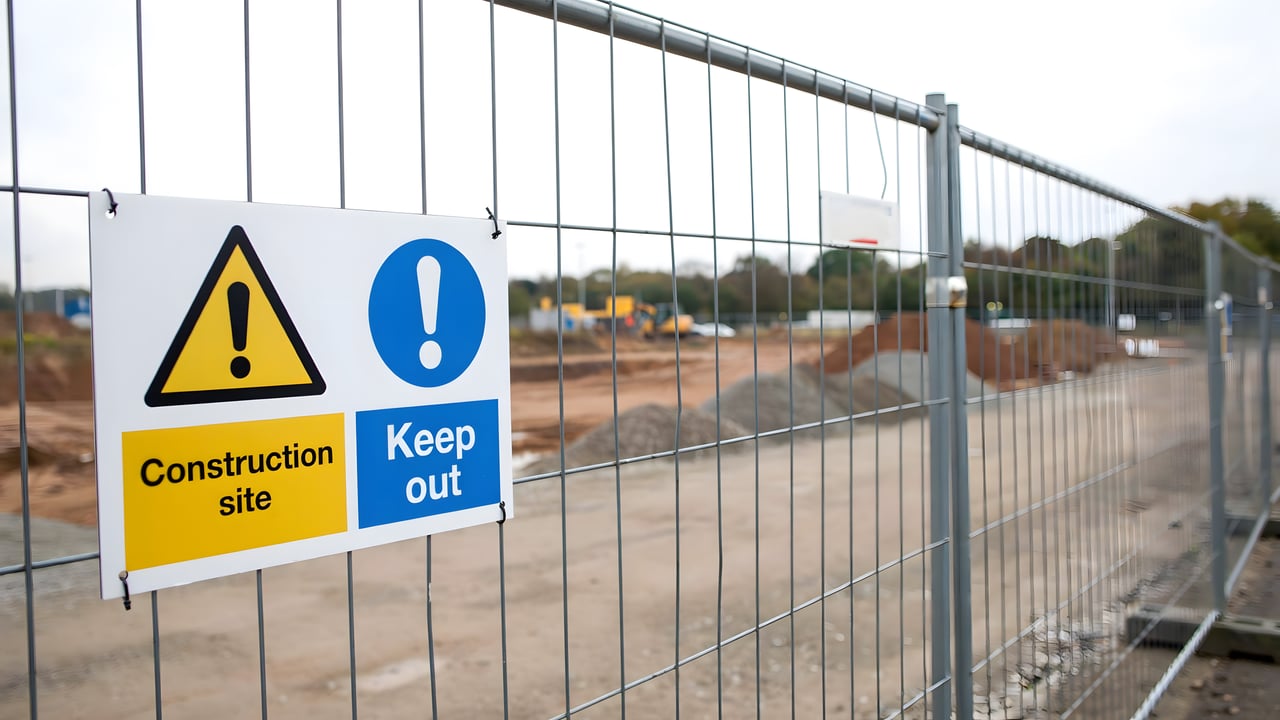
Homebuilders were putting up fences around their construction sites. Not because they were worried about theft or vandalism, but because their subcontractors were afraid to show up for work amid immigration crackdowns. The fences were an attempt to provide some privacy and reassurance to workers who feared immigration agents might arrive. The problem: workers still weren't showing up.
Imagine that. Homes sitting half-finished, not because materials are unavailable or buyers have disappeared, but because the people needed to build them are afraid to come to work. That got me wondering: how widespread is this? Is it just happening along the Texas border, or is this something bigger? Turns out, it's much bigger...and the numbers are staggering.
According to an October report in The Wall Street Journal, nearly two-thirds of homebuilders surveyed in September said immigration enforcement was affecting their workforce. That's up from 23% in March and just 13% a year earlier. Read that again. From 13% to nearly two-thirds in ONE YEAR!
And this isn't just Texas. Construction companies across the country are reporting workers not showing up, subcontractors losing crews and delays to projects already underway. A separate survey by the Associated General Contractors of America found that 29% of responding construction firms had experienced some direct or indirect impact from immigration enforcement in the preceding six months. In the South, that figure reached 42%. But even here in the Midwest, 17% of contractors reported being affected. That's nearly one in six!
And we're seeing it in some of our larger Midwestern cities. The Chicago Sun-Times recently reported residential projects being postponed as construction companies struggle to maintain crews amid immigration crackdowns. Workers are increasingly reluctant to show up, and some contractors are paying higher wages and overtime just to keep projects moving. Here's another interesting number: nearly one-third of Chicago-area construction workers are foreign-born.
You might have also seen the viral Instagram video from September showing a Chicago-area fencing company tearing down a newly installed wooden fence after a dispute with a homeowner over payment. The story spread rapidly, with claims that the homeowner had threatened to call ICE on the Hispanic workers to avoid paying them. However, the company's owner, Cesar Diaz, later clarified that ICE was never involved and that the dispute was over payment and workmanship. The video became part of a much larger national conversation about immigrant workers, even though the immigration allegation itself turned out to be false.
This had me curious: who's actually building our homes, and what's the real percentage of immigrant workers? According to the National Association of Home Builders, immigrants accounted for 26.3% of the entire U.S. construction workforce in 2024.
But look specifically at the trades that build and finish our houses:
57% of drywall and ceiling tile installers were foreign-born.
53% of roofers were foreign-born.
53% of painters were foreign-born.
51% of flooring installers were foreign-born.
35% of carpenters were foreign-born.
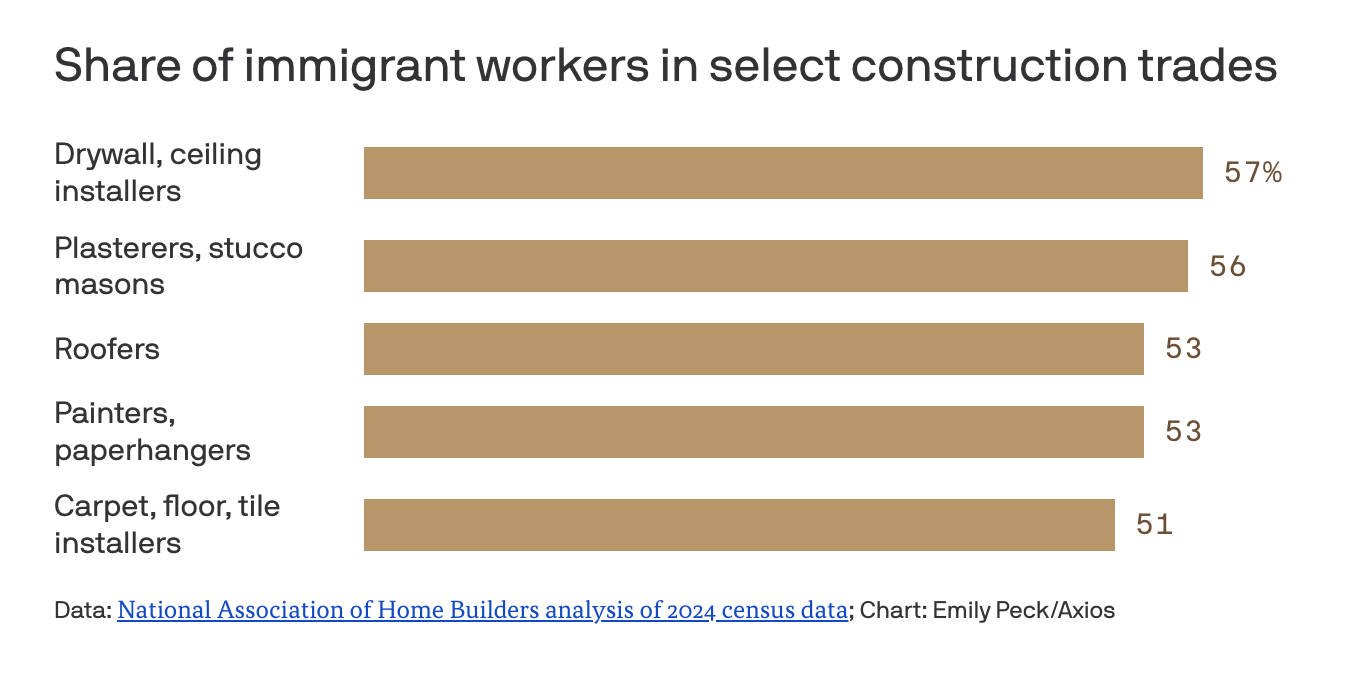
📸 Photo: from Axios, Emily Peck
And there's an important distinction here: immigrant does NOT automatically mean undocumented. These numbers include naturalized American citizens, permanent residents and other foreign-born workers, regardless of immigration status. That's important because homebuilder associations say the fear surrounding immigration enforcement has affected some legally authorized workers, too.
Here's another number that caught my attention. A new October study from Harvard found that foreign-born workers accounted for all of the net growth in America's construction trades workforce from 2013 through 2024. Think about that—all net growth of America's construction trades over the last decade! Essentially, immigrants have been responsible for rebuilding the labor force that constructs America's homes since the Great Recession.
Now consider what happens when that workforce starts shrinking. Construction doesn't work…when workers don't show up. For those of us working with new construction, we understand how interconnected the building process is.
You can't start drywall until the electrical and plumbing rough-ins are completed. You can't install cabinets before the walls are finished. And you certainly can't close on a house that's still waiting for its tradespeople. A missing framing crew might delay the electricians. That pushes the insulation contractor, which then pushes drywall, flooring, finish carpentry and ultimately the closing date. One delay becomes five delays.
Meanwhile, the builder still has a construction loan accruing interest, insurance expenses, property taxes and other holding costs. Those costs don't disappear. Eventually, somebody absorbs them—and often that somebody is the homebuyer. This was already a significant problem BEFORE the latest immigration crackdowns.
The National Association of Home Builders estimates that skilled labor shortages add an average of two months to construction timelines, reduce annual housing production by approximately 19,000 homes and cost builders and consumers about $10 billion annually. To be clear, those estimates represent the broader skilled-labor shortage, not just immigration enforcement. But they demonstrate why losing additional workers can be so consequential.
Okay, so what's the solution? This is where the housing problem collides with the immigration debate.
The Trump administration has defended its enforcement policies, emphasizing the need to enforce immigration law and expand opportunities for American workers. The White House has also disputed claims that ICE is arresting people legally in the country. Meanwhile, homebuilders are warning that the industry's existing labor supply cannot meet demand.
In September, the National Association of Home Builders outlined an approach that includes border security, more predictable enforcement, legal pathways for certain workers and greater investment in training Americans for construction careers. Those last two points matter. We absolutely need more Americans entering the skilled trades. But developing an experienced roofer, carpenter or drywall installer takes time. You can't replace decades of experience overnight. And you can't simply legislate 300,000 additional qualified construction workers into existence!!
Okay, so what does this mean for housing? Here's the contradiction I keep coming back to. Housing affordability has become one of the biggest economic challenges facing Americans. We need more homes, more construction and more people entering the housing market. But building those homes requires workers!
And when labor becomes harder to find, construction becomes slower and potentially more expensive. Builders have less incentive to start new projects, particularly when mortgage rates are already keeping buyers on the sidelines.
Here in the Iowa City area, I'm not suggesting we're seeing the same disruptions reported in South Texas. The evidence shows considerable regional differences. But the underlying problem should matter to anyone concerned about housing affordability.
We spend a tremendous amount of time talking about zoning reform, permitting, interest rates and construction costs as obstacles to increasing housing supply. All worthwhile conversations. But none of those reforms can build a house without a workforce.
Whatever your position on immigration policy, there's an economic reality that deserves attention: America's housing supply depends heavily on immigrant labor.
And if we want more homes, we need a realistic plan for who is going to build them.