Here's something funny about luxury homes. Some of the most expensive upgrades are things you'll probably NEVER notice. I'm not talking about beautiful marble countertops, elaborate chandeliers or custom cabinetry. Those are obvious. You see them, admire them, and generally understand why they cost so much.
I'm talking about the things luxury homeowners are spending hundreds, thousands and sometimes even hundreds of thousands of dollars on…just to make them disappear. And as I'm discovering during my own remodel, making something look like it isn't there can be surprisingly expensive!
Here are three increasingly ridiculous examples of what I'm talking about.
1. The $200 air vent nobody notices.
Let's start with something practically every house has and nobody pays much attention to: air vents.
You know those rectangular metal grilles on your walls and ceilings? The ones with visible screws, louvers and little edges that stick out from the drywall? Well, apparently those are becoming unacceptable in some luxury homes!
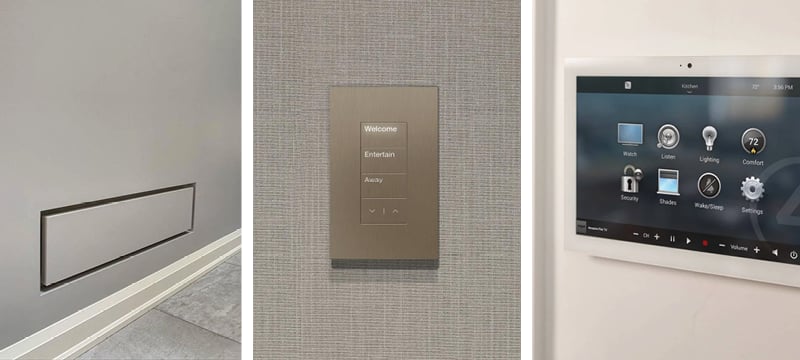
Instead, designers are specifying flush, drywall-integrated vents that practically disappear into the surrounding wall. Companies like Fittes, which makes the Aria Vent line, manufacture specialized air returns and supply vents designed to be integrated into walls or floors. Certain wall models are installed during drywall finishing, with their edges mudded into the wall and painted to match. Once finished, all you really notice is a narrow opening where the air passes through.
They're beautiful. Or perhaps I should say they're beautiful because you barely see them. Here's the catch. While a conventional metal grille might cost $20 or $30, premium drywall-integrated vents can cost $100, $200 or even several hundred dollars EACH, depending on size and design. And that's before installation!
Because these aren't necessarily simple replacements you screw onto an existing opening. Some need to be framed, positioned and installed before the drywall is finished, followed by the same mudding, sanding and painting as the surrounding wall.
I know because I've been figuring out how to incorporate one of these into my own remodel. I'm working with a fairly large cold-air return, and instead of installing a conventional grille, I want it integrated into the drywall.
Imagine explaining that to somebody: I'm spending more money on an air vent specifically so nobody notices the air vent. Congratulations. Apparently, I've entered the next level of luxury-home remodeling!
One practical warning, though: airflow still matters. The prettiest grille in the world isn't worth compromising the performance of your heating and cooling system. Always have the HVAC contractor verify the vent's capacity, return-air requirements and service access.
2. A $500 light-switch plate. Seriously.
Here's another detail that's getting the luxury treatment: the humble light switch.
Think about how much money people spend designing a beautiful room. Custom wall treatments, expensive wallpaper, natural stone, elaborate millwork and the perfect paint color. Then someone cuts a hole in the wall and installs a white plastic switch plate with two screws staring back at you. Ya, luxury designers have decided that's no longer acceptable either!
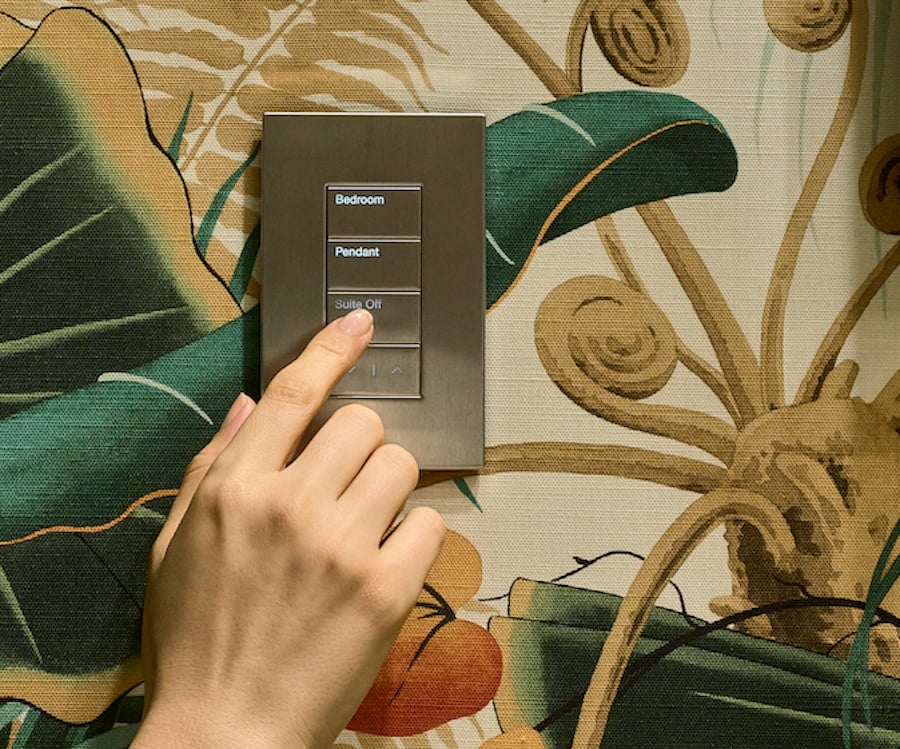
Enter the world of architectural light switches and screwless wall plates. And I'm not just talking about the inexpensive snap-on covers you can find at a home improvement store. Some of these are beautifully machined pieces of solid brass, bronze or stainless steel. Others are made from transparent acrylic or glass, designed to blend into the surrounding wall.
Forbes & Lomax, for example, offers an Invisible range with transparent, screwless plates that can blend into painted or wallpapered walls. Then there's Buster + Punch, with decorative metal plates in brass, steel and bronze finishes. And this is where the prices start getting interesting.
Some premium wall plates alone cost more than $500. Add the actual switch or dimmer and the total can climb considerably higher. But why stop there? Companies like Lutron offer sophisticated architectural keypads that replace an entire row of conventional light switches with a beautiful, minimal control panel such as the ones you find at luxury hotels.
Instead of five switches controlling five sets of lights, you might have a single keypad with buttons labeled Entertain, Relax, Evening and All Off. And some of these keypads cost several hundred dollars EACH before installation and programming. Now imagine outfitting an entire luxury home. Suddenly, the light switches have become their own line item in the construction budget!!
And here's what I find particularly interesting: this isn't necessarily technology for technology's sake. It's about reducing visual clutter. A beautifully designed wall shouldn't need six switches lined up like buttons on an elevator. That's the appeal. Less visual noise, better materials and controls that feel like they belong in the architecture. But is it worth spending hundreds of dollars to eliminate two visible screws?
Well…that depends on how much those screws bother you!
3. The $100,000 smart home you might not even know exists.
Okay, now we're entering an entirely different level of luxury.
Most of us are familiar with smart-home technology. Smart thermostats, Wi-Fi light bulbs, video doorbells, Sonos speakers and automated blinds. I have plenty of this technology myself, and you can accomplish some pretty impressive things without spending a fortune.
But then there's Control4. This is where smart-home technology goes from buying gadgets at Best Buy to hiring professionals to design an entire operating system for your house.
I'm talking about systems that integrate practically everything: lighting, window shades, heating and cooling, music, televisions, security systems, home theaters and sometimes even outdoor entertainment. Imagine walking into your home and pressing one button labeled Welcome Home.
A few of my clients installed this system--which requires a Control4 specialist to install. The lights illuminate at predetermined levels. Window shades adjust. The temperature changes. Your favorite music begins playing in certain rooms. Or imagine pressing Goodnight and having the house turn off unnecessary lights, lower the shades and adjust the temperature automatically. Pretty impressive, right?
But here's the part most homeowners don't realize: the really sophisticated systems require much more than buying equipment. You may need dedicated processors, specialized wiring, network infrastructure, equipment racks, programmable lighting controls, integration specialists and ongoing service. And that gets expensive. REALLY expensive (ask my clients)!
While smaller Control4 installations can cost a few thousand dollars, comprehensive whole-home systems can reach $100,000, $200,000 or more depending on the size of the house and the technology being integrated. Some luxury integration companies even establish substantial minimum project budgets for the jobs they'll accept. Yes, you read that correctly. The technology infrastructure in a house can cost as much as another house!
And what's particularly fascinating is that the most sophisticated systems are designed to be practically invisible. No tangled wires. No cluttered entertainment cabinets. No collection of remotes scattered across the living room.
Equipment can be centralized in mechanical or technology rooms. Speakers can be integrated into ceilings or walls. Automated window shades can disappear into concealed ceiling pockets. And entire rooms can be controlled from a single elegant keypad or discreet touchscreen. The expensive part isn't necessarily what you're looking at. It's everything happening behind the walls.
Control4 isn't alone in this market, either. Companies like Crestron and Savant offer sophisticated professionally integrated home automation systems, while Lutron's HomeWorks platform provides premium lighting and shading controls.
Now, there's an important downside worth discussing: maintenance and technology obsolescence.
A beautiful marble countertop might look wonderful for generations. A sophisticated automation system, on the other hand, will eventually need software updates, replacement components and potentially significant upgrades.
And unlike a basic light switch, repairing a proprietary automation system may require a specialized technician. Which raises an interesting question: at what point does a smart home become so complicated that it's actually less convenient?
I love technology, but I've always believed the best technology should make life simpler, not give you another system to manage.
So, is any of this actually worth the money? Here's the interesting part about these three examples. On the surface, they seem completely ridiculous. Hundreds of dollars for an air vent? More than $100 for a switch plate? Six figures to turn on your lights and close the blinds? Come on!
But there's a bigger design philosophy behind all of this. For decades, luxury homes were often defined by what you could SEE. The grand staircase, elaborate trim, expensive finishes, enormous chandeliers and dramatic architectural features. And those things certainly haven't disappeared. But increasingly, another form of luxury is emerging: the elimination of visual clutter!!
The air vent that blends into the wall. The light switches that become part of the architecture. The technology that quietly operates in the background without a room full of equipment and remotes. The best examples don't necessarily demand your attention. They make a space feel more intentional, refined and effortless.
We're spending more money not necessarily to add things to our homes, but to make ordinary things disappear. Now, would I recommend spending $100,000 on a smart-home integration system for every luxury house? Absolutely not. And a $200 air vent isn't going to make a $500,000 house worth $550,000.
But these details illustrate just how far homeowners and designers are willing to go in pursuit of a beautifully finished space. And as someone currently spending an unreasonable amount of time figuring out how to make a cold-air return disappear into drywall, I apparently understand the obsession more than I'd like to admit.
Welcome to the new luxury: spending a small fortune on details nobody is supposed to notice.