Well, this is awkward.
A while back, I wrote a story titled “Is the Dining Room Dead?”, questioning whether the formal dining room was becoming a relic of the past. I even created a little exercise ranking the importance of different rooms in a house.
And guess where the formal dining room ended up in my own ranking? Near the BOTTOM!
Here's why. My family eats together every morning and evening, but we almost always gather in our informal dining area. Meanwhile, our formal dining room sits largely unused, except for holidays, dinner parties and special occasions.
So naturally, I questioned whether we really needed a separate room dedicated to something we do only a few dozen times a year.
Well, apparently, designers have decided it's time to bring that room back. And just in time for Thanksgiving!
Okay, wait...weren't we tearing down all the walls? For much of the last two decades, the hottest trend in residential architecture was open-concept living. Knock down the wall between the kitchen and dining room! Open the living room! Combine everything into one enormous great room!
And I get it. Open floor plans offer incredible advantages. Better sightlines, easier entertaining, more natural light and the ability to keep an eye on the kids while preparing dinner.
In the real estate world, an open-concept kitchen connected to the living area became practically synonymous with modern living. But apparently, we may have taken the whole thing a little too far.
According to recent reporting in ELLE DECOR and House Beautiful, designers are seeing renewed interest in dedicated dining rooms. And it's part of a broader shift toward more defined spaces throughout the home.
Think about it. When your kitchen, dining room and living room are all one giant space, everything happens together. The television is playing. Someone's cooking. The dishwasher is running. The kids have their homework spread across the island. Meanwhile, you're trying to enjoy dinner with friends while staring directly at the pile of dishes waiting in the kitchen. Perhaps a few walls weren't such a terrible idea after all!
But...this isn't the formal dining room you're remembering!!
Designers aren't necessarily bringing back the stiff, overly formal dining rooms of the past. You know the ones: a giant mahogany table, matching china cabinet, chairs that nobody actually likes sitting in and a chandelier that hasn't been updated since 1992. Those rooms looked impressive, but often weren't particularly inviting. The new dining room is something different.
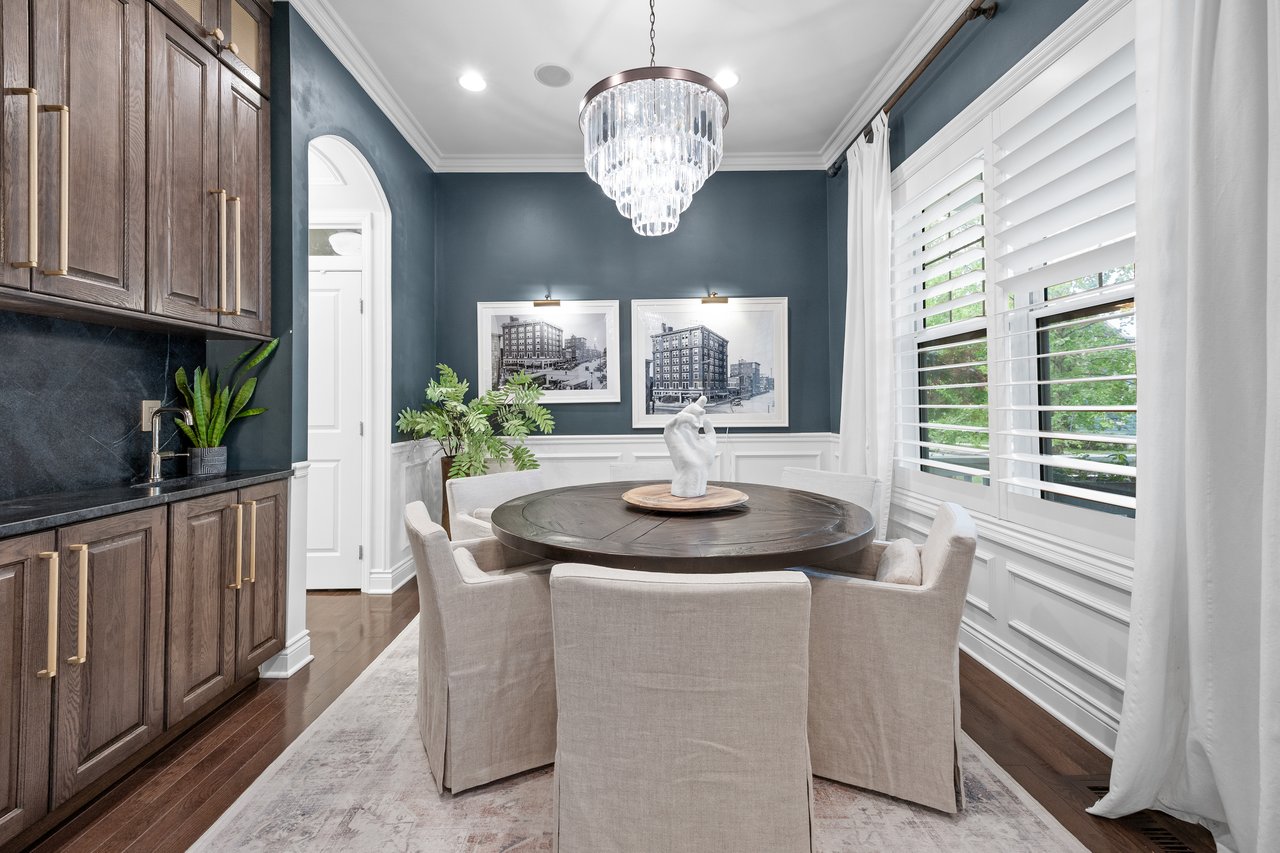
Designers are calling it soft formal—a dedicated space for dining that feels comfortable enough to use regularly, but special enough to make entertaining an occasion. Think upholstered chairs, rich wood tables, comfortable seating, interesting artwork and dramatic lighting.
The goal isn't to create a museum for your grandmother's china. It's to create a room people actually WANT to spend time in. And that distinction matters.
One thing I love about this trend is that a separate dining room gives homeowners permission to get a little more adventurous with design. When your kitchen, dining and living spaces all flow together, there's often pressure to make everything coordinate. The same flooring. Similar wall colors. Complementary finishes. One consistent design language throughout.
But give a dining room its own walls, and suddenly the rules change. Designers are embracing richer colors, including chocolate browns, deep greens, burgundy and charcoal. Wallpaper is making a major statement, especially dramatic murals and textured wallcoverings.
And don't forget the ceiling! Statement chandeliers, decorative ceiling treatments and beautiful millwork can transform a dining room into one of the most memorable spaces in the house.
Even dining furniture is becoming less predictable. We're seeing mismatched chairs, antique tables paired with contemporary lighting, upholstered banquettes and more interesting combinations of materials. It's less about perfectly matching everything and more about creating a room with personality. Hey, I'm all for that!
Here's something I've been thinking about. Maybe this trend isn't really about dining rooms at all. Maybe it's about how much our relationship with our homes has changed.
Over the last several years, our houses have become offices, classrooms, entertainment centers, gyms and practically everything in between. We designed spaces to be flexible, multipurpose and connected. But perhaps there's a downside to having every room do everything.
A dedicated dining room gives us a place where the primary purpose is remarkably simple: sit down, share a meal and spend time together. No television competing for attention. No kitchen island covered with mail. No feeling like you're sitting in the middle of everything happening in the house.
Just a table, some chairs and the people around them. And maybe that's the luxury. Not more square footage. Not a bigger kitchen island. A room designed specifically for spending time together.
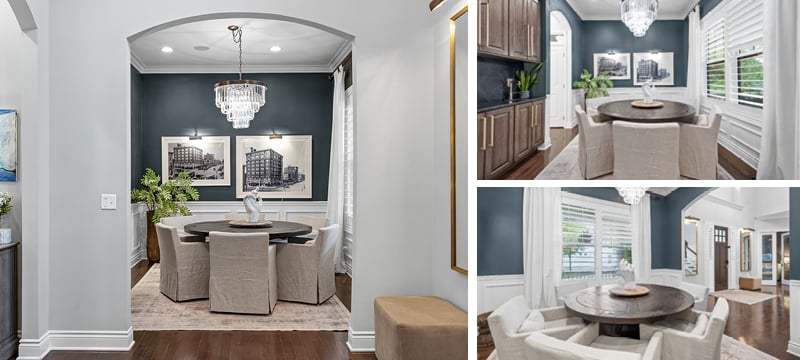
Yes, but...you're asking, "Adam, do we REALLY need another room?" This is where I put my Realtor hat back on. A beautiful design trend doesn't necessarily mean every house should incorporate it. Square footage is expensive. And for many homeowners, particularly those building or buying homes with limited space, a dedicated dining room simply may not make sense.
I'd still argue that a home office, another bedroom or a larger everyday living space might offer significantly more utility depending on the household. And I'm certainly not suggesting homeowners should start rebuilding every wall they knocked down during their last remodel!
There's also an important distinction between what designers are seeing in higher-end projects and what the broader housing market actually demands. A revived interest in formal dining rooms doesn't automatically mean buyers will pay more for them.
But if you're building a luxury home with enough square footage, or already have a formal dining room sitting largely unused, perhaps it's worth rethinking how that room functions. Maybe it doesn't have to be reserved for Thanksgiving and Christmas.
Maybe it can become the place for Friday-night dinners, card games, celebrations and those evenings when nobody is in a hurry to leave the table. And maybe the best dining room isn't necessarily the most formal one. It's the one you actually use.
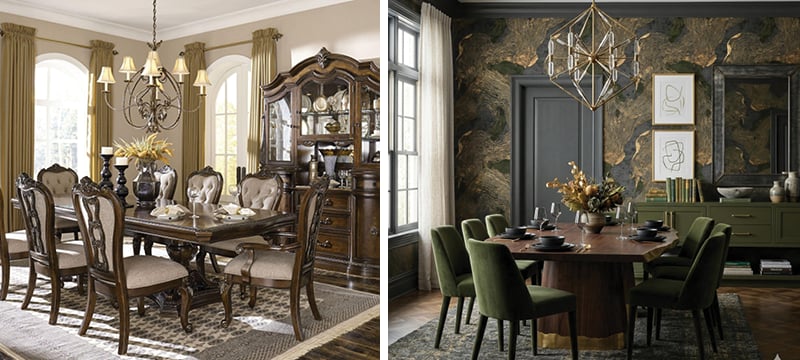
📸 LEFT: Then: Formal and traditional - Matched furniture and elaborate furnishings characterized many older formal dining rooms.
📸 RIGHT: Now: Soft formal - Layered colors, comfortable furnishings, and design-forward lighting make the room feel welcoming.
So...was I wrong about the dining room? Well, not entirely!
I still believe floor plans should reflect how people actually live, not simply follow whatever happens to be trending. And in my own house, our informal dining area remains one of our most-used spaces. I don't expect that to change anytime soon. But I also appreciate what designers are recognizing: there's something valuable about having rooms with a distinct purpose.
And perhaps the dining room never needed to disappear. It just needed to become a little less formal. So as we gather around the table this Thanksgiving, perhaps it's worth reconsidering that room we've been using only a handful of times each year.
Because after spending two decades tearing down walls to bring everyone together, maybe we're discovering that sometimes a little separation is exactly what brings people closer.