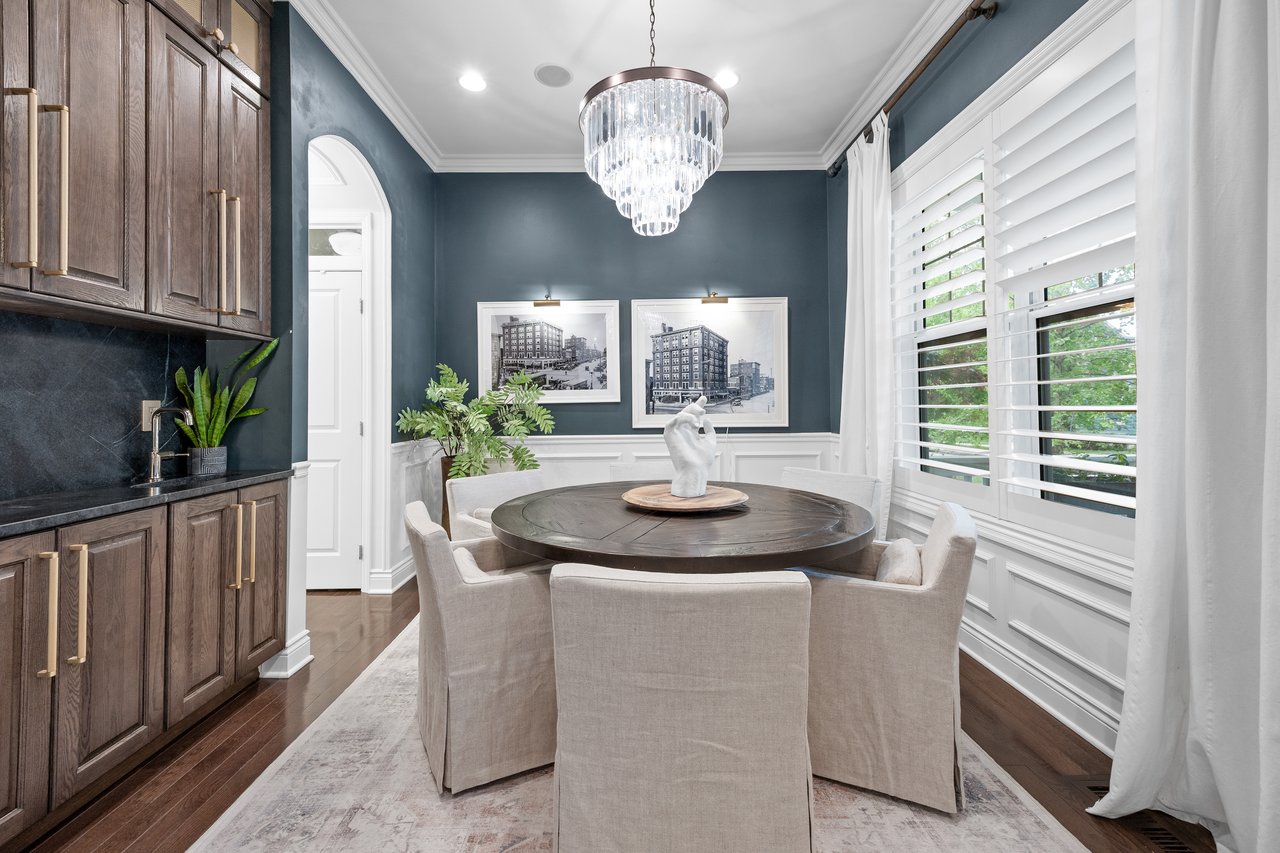
I recently posted on social media asking people to weigh in on a few options for updating my bedroom. New bedding, new fan, and new rug. The rug was, by far, the most controversial.
Should it bring in bold color? Should it match the rest of the room? Should it have pattern? Should it be quieter? Or should it be something completely different from everything else going on? There were opinions…lots of them…and I’m not sure the debate is actually over.
But then I came across a story in Veranda that I haven’t stopped thinking about: the “wrong rug” might actually be the right rug. The idea comes from the “wrong shoe theory” in fashion. Instead of wearing the obvious shoe with an outfit, you choose something slightly unexpected—a sneaker with a dress, for example. It creates a little tension. The outfit suddenly feels less coordinated and somehow more interesting. Designers are beginning to think about rugs the same way.
As we strive for more ‘collected’ and thoughtful spaces, perhaps one thing we haven’t considered is we’re matching things too well.
A formal dining room doesn’t necessarily need a formal rug. A modern room doesn't necessarily need a modern rug. And your rug certainly doesn't have to perfectly pull together the exact colors already used in the pillows, walls and furniture. In fact, maybe it shouldn't.
Interior designer Lauren Wodicka told Veranda that introducing a counterintuitive rug can keep a room from feeling “overly precious.” That slight mismatch creates tension and makes a space feel more alive.
Okay, so that had me thinking…as we strive for more ‘collected’ and thoughtful spaces, perhaps one thing we haven’t considered is we’re matching things too well.
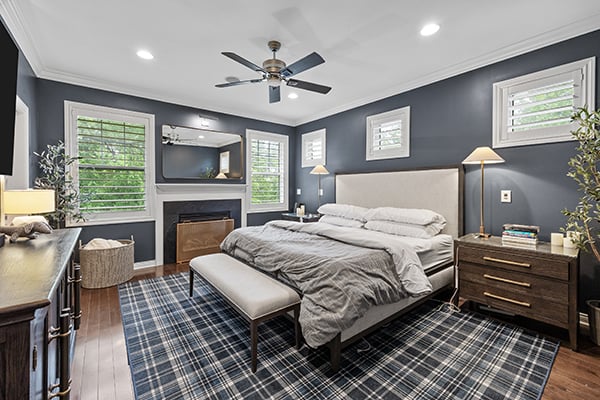
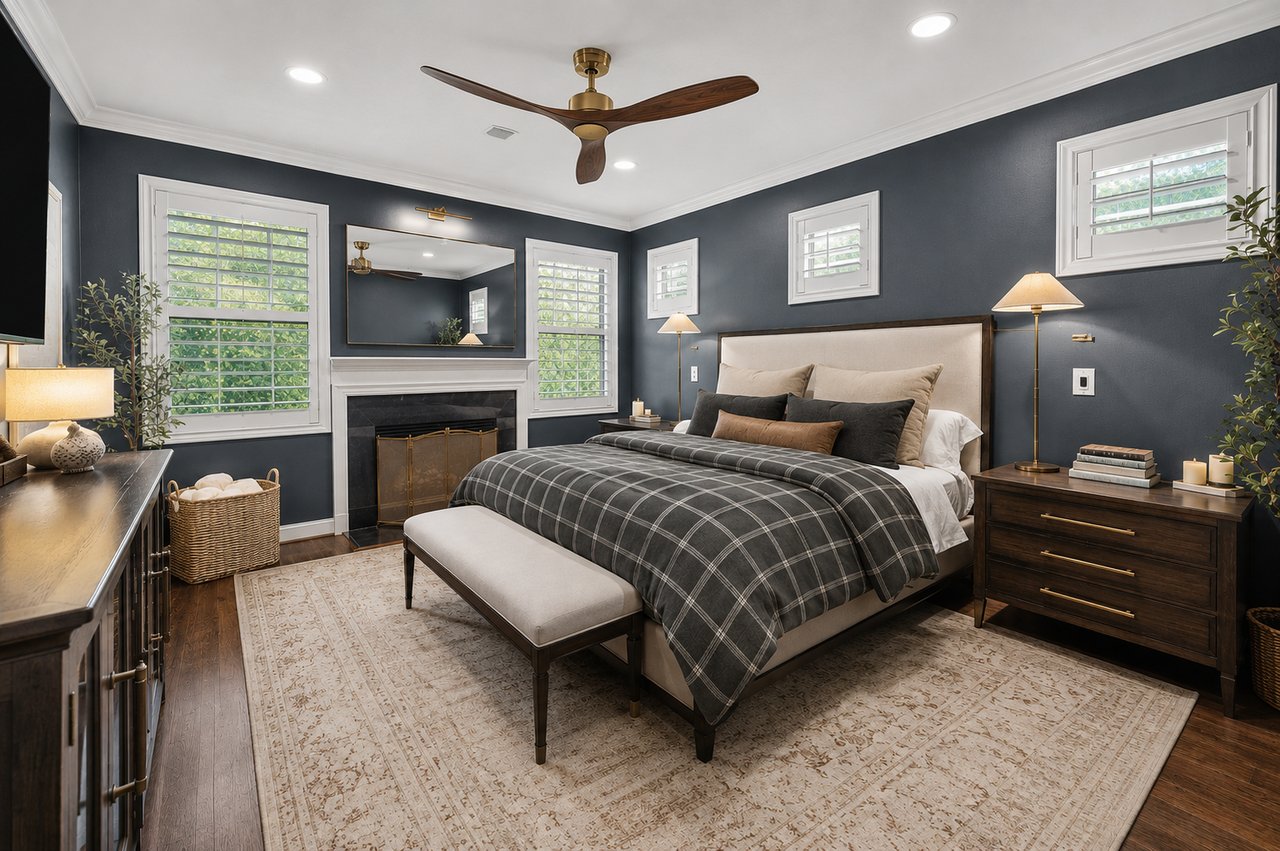
📷: The original design was 'matchy' matchy with plaids and the same color blue.
There was a period when decorating almost became a matching exercise. Find the blue in the artwork, repeat it in the rug, pull another shade into the pillows, match the metals, coordinate the wood and make sure everything belongs to the same visual family. Nothing wrong with that. But taken too far, a room can start looking less like someone lives there and more like everything arrived together on the same furniture truck.
Great rooms usually have something that doesn't quite behave. Maybe it's an antique rug under very contemporary furniture. A colorful Persian rug in an otherwise restrained bedroom. A simple sisal rug underneath a formal dining table. Or a rug whose color seems almost unrelated to the rest of the room—but somehow makes everything around it more interesting. That's essentially the wrong rug theory. The rug doesn't clash. It interrupts.
So why ‘rugs’? What are we fixating on rugs if the theory holds for other design choices too. Because rugs themselves are getting more attention in design.
Designers interviewed by Veranda pointed to vintage and antique rugs, layered rugs, stronger colors, more unusual patterns and richer textures as major directions for 2026. One designer described vintage rugs as giving a room instant patina and history—something a brand-new piece simply can't replicate.
Which fits into another larger design shift I've been watching, and reported last month: people increasingly want houses to feel collected rather than decorated. A rug is particularly good at doing that.
Put a slightly faded hundred-year-old rug underneath a brand-new sofa and suddenly the sofa doesn't look quite so new. Put a rough natural-fiber rug underneath ornate furniture and suddenly the furniture feels less formal. Put an unexpected geometric rug into a traditional room and suddenly the room doesn't feel trapped in a particular decade. It creates a story that isn't perfectly linear. Because real houses aren't perfectly linear either.
The theory unfortunately does not mean you can throw absolutely any rug into a room
Okay, hold on. The theory unfortunately does not mean you can throw absolutely any rug into a room and declare yourself an interior designer. Sorry (‘thankfully’ sorry). The unexpected rug still needs some connection to the room: maybe it's scale, or maybe texture, or maybe one subtle color, or maybe it's simply the contrast itself.
There's also one rug rule I still wouldn't break: size matters. One of the other trends designers are pointing toward is larger rugs—big enough that furniture actually sits comfortably on them rather than orbiting around a tiny rectangle floating in the middle of the room.
A surprising rug can look intentional. A rug that's four feet too small usually just looks four feet too small.
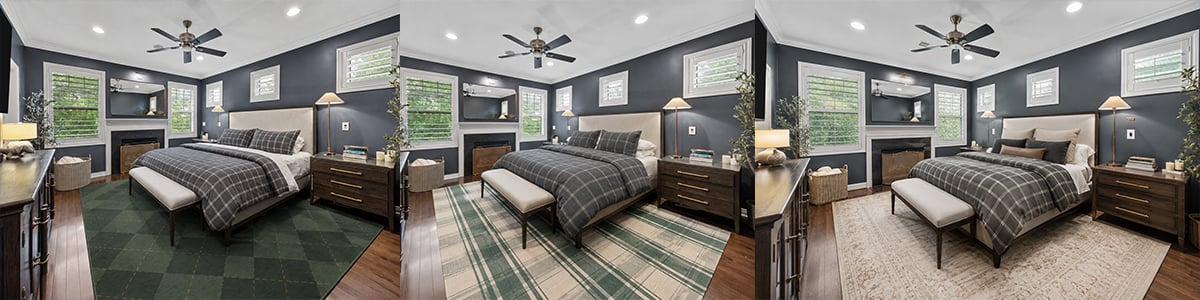
📷: I choose the non-plaid option, opting for contrast.
My instinct when updating my bedroom was to find the rug that best coordinated with everything already there. The existing rug ‘matched’ the walls. Maybe that's exactly the wrong approach. Instead of asking, Which rug matches the room?, the better question might be, “which rug makes the room more interesting?”
That doesn't necessarily mean louder, more colorful, or I should choose something ugly just to prove I understand a design theory. It means allowing one element in the room to have a slightly different personality.
I chose contrast, a light beige Persian rug. It simply caught my eye even though it wasn't the thing I originally went looking for. It makes the room feel a little less perfect.