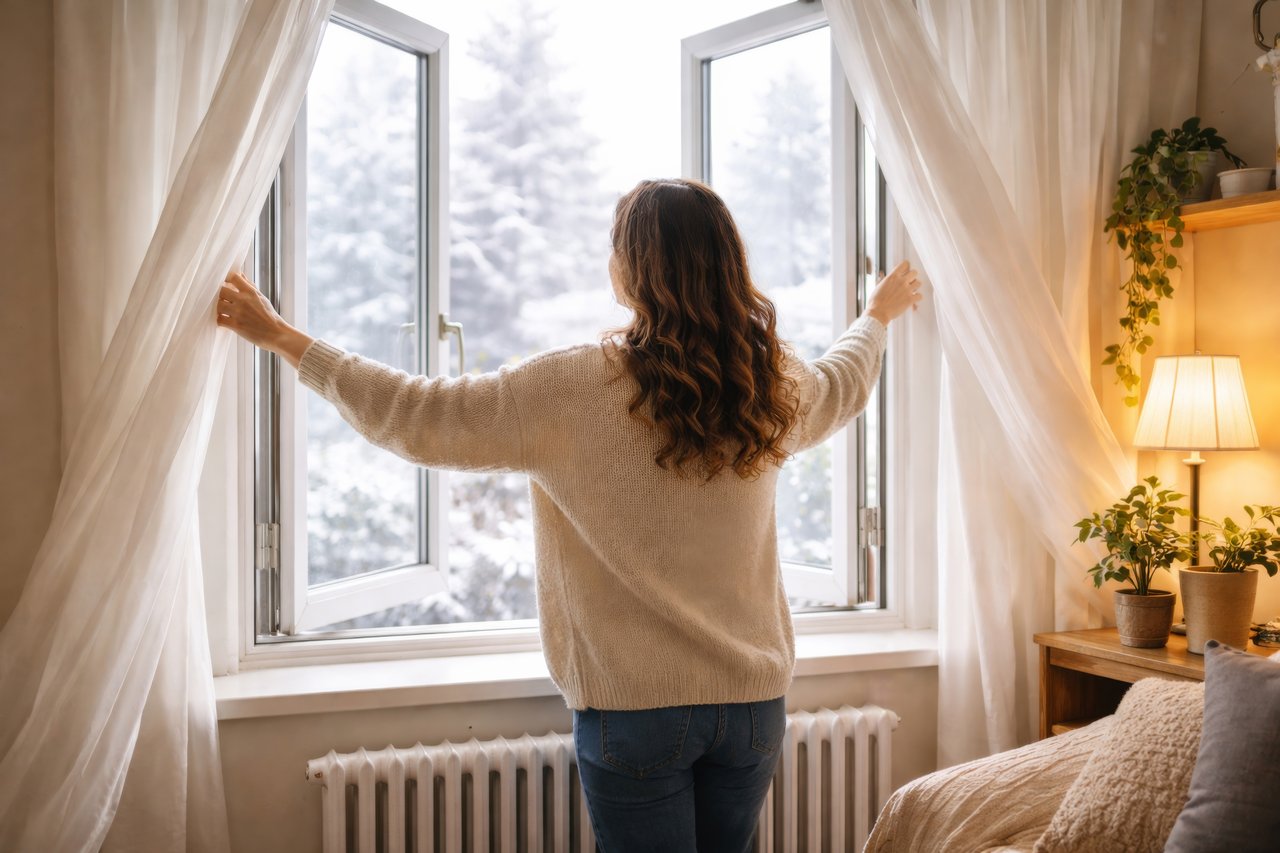
You might think the idea of opening your windows in the dead of winter sounds like something your dad would yell about while holding the thermostat (my father kept the temperatures so low, sweaters were abundant in our house). But lately it’s been popping up everywhere—from Time to The Wall Street Journal to a swarm of TikTok videos calling it “burping the house.”
And the concept actually has a name: lüften.
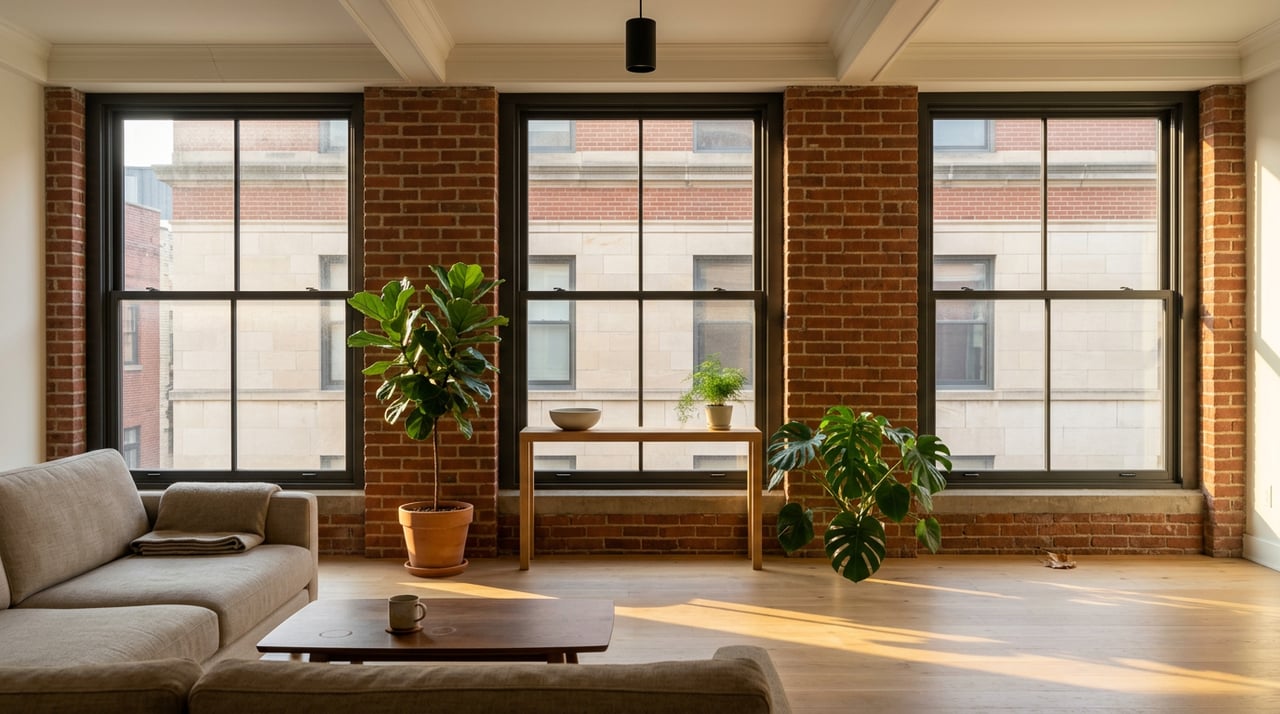
I first witnessed lüften this fall while visiting Norway—where people not only open their windows daily, but many homes don't even have screens. What is “Lüften”? The word comes from Germany and simply means “to air out.” The practice is straightforward: open your windows fully for 5–10 minutes each day, even in winter, to flush out stale indoor air and replace it with fresh outdoor air. In much of Europe—especially Germany and Austria—it’s practically a cultural habit. Homes are tightly sealed for energy efficiency, so people intentionally air them out once or twice a day.
Does it actually have health benefits? Shockingly, experts are saying it does. First, homes are packed with things that quietly pollute indoor air. Think about what’s floating around your house: cleaning chemicals, candles, air fresheners, gas stove emissions, off-gassing from furniture (and building materials), dust and allergens. Then there’s us. Humans shed skin cells, hair, moisture, and CO2 all day long. In a sealed house, that cocktail just keeps circulating through the HVAC system.
Opening the windows—even briefly—can reduce indoor humidity, dilute airborne pollutants, remove odors and lower concentrations of CO2. In other words, it’s the indoor-air equivalent of hitting the reset button.
Then there’s a sleep connection. Some sleep studies suggest that cooler rooms with fresh air can help people fall asleep faster and sleep more deeply (looking at you, my colleague and friend Nancy Steyers, who has been actively practicing this as long as I’ve known her). Lower CO2 levels and slightly cooler temperatures appear to support better sleep cycles. Which means the old-school habit of cracking the window at night might not have been old-fashioned at all—it might have been good physiology.
The immediate reaction from most homeowners, including myself, is, “Aren’t I just throwing heat outside?” Surprisingly, not much—if you do it correctly. Because the windows are open for only a few minutes, the air exchanges quickly but the house’s thermal mass (walls, floors, furniture) stays warm. Once the windows close, the room reheats quickly.
So…voodoo or legit? The science says it’s real. Indoor air is often 2–5X more polluted than outdoor air, according to environmental health studies. Briefly ventilating your home is one of the simplest ways to improve that. So, are you trying it?