Trying to make sense of Iowa River Landing from a real estate angle? You are not alone. On the surface, this Coralville district looks simple: newer buildings, walkable retail, hotels, entertainment, and a polished mixed-use setting. But once you start looking at rents, vacancy, HOA structure, and public investment, the numbers tell a much more useful story. If you want a clearer read on what makes this submarket different, this breakdown will help you separate headline appeal from actual underwriting logic. Let’s dive in.
Why Iowa River Landing Stands Out
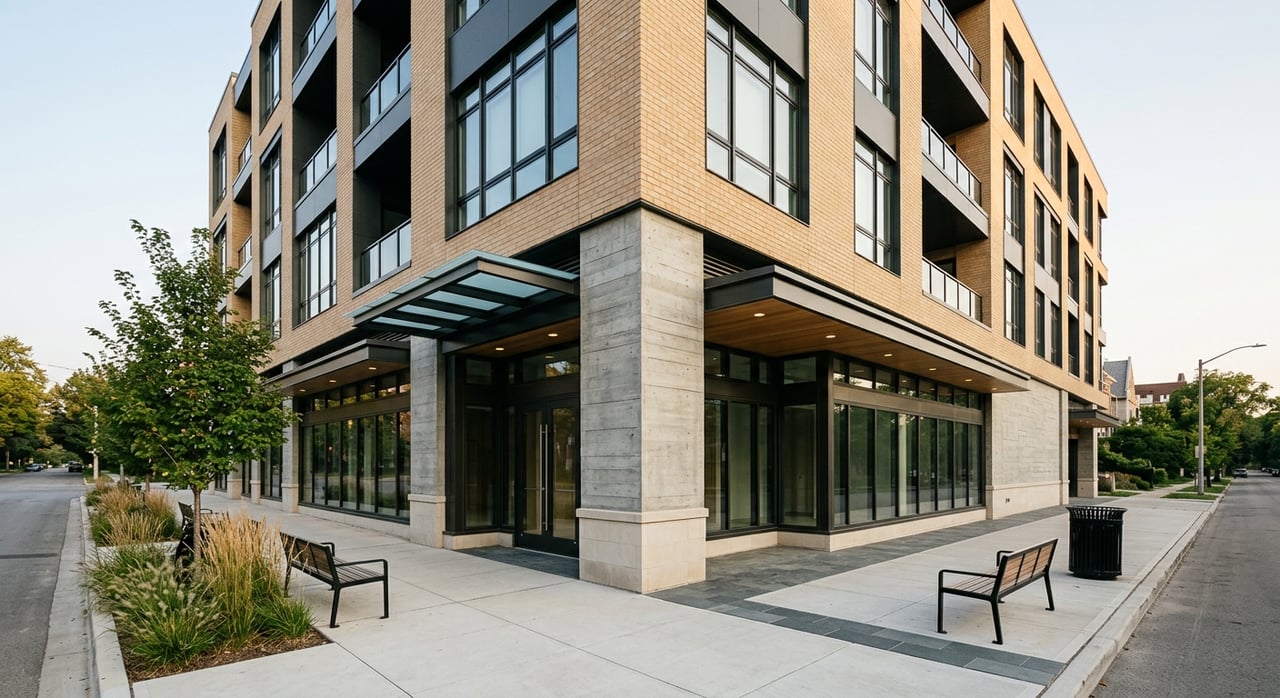
Iowa River Landing is not a typical retail corridor. It is a 180-acre mixed-use district at I-80 Exit 242 and 1st Avenue, built around a blend of shopping, dining, hospitality, entertainment, office space, and residential product. According to Coralville and the district’s leasing materials, the area includes Xtream Arena and GreenState Family Fieldhouse, about 250,000 square feet of shopping and dining, 41,000 square feet of office space, and visibility to more than 70,000 cars daily.
That mix matters because it creates demand from multiple directions at once. The current district directory includes 12 dining listings, 18 shopping listings, 9 play listings, 4 stay listings, and 2 live listings, including River Bend Condominiums and The Landing by the Watts Group. You can explore that tenant mix through the Iowa River Landing directory.
This layered setup was part of the plan from the beginning. The original Iowa River Landing Reinvestment District analysis contemplated hotels, arenas, retail, restaurants, parking, townhomes, and condominium units, showing that the district was designed as a phased mixed-use project rather than a one-note commercial strip.
What the Demand Numbers Really Say
If you are reading the market, start with the difference between Coralville-wide numbers and Iowa River Landing-level product. They are not the same thing, and treating them as interchangeable can distort your assumptions.
According to U.S. Census QuickFacts for Coralville, the city’s population estimate reached 23,959 in July 2024, up 7.3% from the 2020 Census base. QuickFacts also reports an owner-occupied housing rate near the mid-50% range and a citywide median gross rent of $1,057 for 2020 through 2024.
That citywide rent figure is useful, but it does not define the upper end of the market. Larger apartment properties in Coralville are renting at a higher level. RentCafe’s Coralville rent data estimates average apartment rent at $1,364, with studios at $1,157, one-bedrooms at $1,258, two-bedrooms at $1,327, and three-bedrooms at $1,963.
The gap between the Census median and the apartment average is important. In practical terms, it suggests that broad city averages capture all kinds of rental housing, while newer or larger multifamily product can command meaningfully higher rents. For a district like Iowa River Landing, that difference is not just academic. It changes how you should evaluate cash flow, resale potential, and what kind of renter or buyer can realistically absorb the cost.
Why IRL Commands a Premium
Premium pricing in Iowa River Landing is tied less to broad affordability and more to convenience, district identity, and access to amenities. That is what makes this submarket feel different from the Coralville average.
The district brings together hotels, entertainment, restaurants, retail, and structured parking in one concentrated area. The official directory includes brands and uses such as Trader Joe’s, Von Maur, Hyatt Regency, Drury, Staybridge, Homewood Suites, museums, Iowa Athletic Club, and Xtream Arena. You can also review district context on the Iowa River Landing leasing page.
For residential product, newer condo-style units can reflect that premium. The research report notes current Parkview Lofts asking rents around $1,300 for a studio and $1,560 for a one-bedroom. Even without overgeneralizing from one building, those numbers help show why building-level comps are more useful than city averages when you are evaluating Iowa River Landing opportunities.
Vacancy Still Matters
It is easy to assume a district like Iowa River Landing should always stay full. That is not a safe underwriting habit.
Coralville’s broader housing profile shows real renter demand. The ACS data cited in the transit plan shows 45.7% renter-occupied units and a rental vacancy rate of 3.3%, which points to a relatively tight market. But even in a tighter environment, you still need to underwrite vacancy and credit loss instead of assuming every premium unit rents instantly at the highest possible number.
This is where discipline matters. If your model only works at the top of the market, with no downtime and no friction, the deal may be thinner than it looks.
The Hidden Math: HOA, CAM, and Reserves
In Iowa River Landing, the biggest underwriting mistakes often happen below the rent line. That is because mixed-use and condominium ownership can carry cost layers that do not show up in a simple price-per-square-foot comparison.
The River Bend condominium handbook makes this very clear. Common expenses include capital reserves, monthly dues are required, and unpaid amounts can become liens with interest, collection costs, and attorney fees. The handbook also states that if the association has to take over an owner’s maintenance responsibility, the cost can be assessed back to that owner.
For you as a buyer or investor, that means monthly dues are only the starting point. You should also look at:
- Reserve strength
- Special assessment history
- Delinquency levels
- What maintenance belongs to the owner versus the association
- Parking or garage-related charges
- Insurance deductibles
- Any master-association structure
In a mixed-use setting, it is also smart to review whether commercial common-area costs could affect residential budgets, and whether there are leasing restrictions or short-term rental limits in the governing documents.
Parking and Event-Day Reality
One of Iowa River Landing’s strengths is its public parking system, but that does not mean parking is a non-issue. In fact, it is a key operating detail.
The district includes a west ramp, transit intermodal facility ramp, north ramp, south lot, and street parking, according to the district’s published parking information available through the Iowa River Landing directory and district pages. For many users, that supports walkability and convenience.
At the same time, event traffic changes the experience. Arena activity, hotel demand, restaurant traffic, and retail visits can all affect access and congestion patterns. If you are evaluating a residential or mixed-use property here, parking availability and event-day flow should be part of your decision, not an afterthought.
Public Investment Is Part of the Story
Iowa River Landing did not emerge in a vacuum. Public infrastructure and long-range planning have played a major role in shaping its momentum.
A major example is the 1st Avenue/I-80 interchange project. Coralville says the rebuilt diverging diamond interchange included the new Iowa River Landing Place connection, which opened on August 30, 2024, with final landscaping completed in 2025. The bridges were designed to accommodate possible future widening of I-80, and the project is intended to improve safety and reduce delay.
That matters because access is value. Easier district entry and improved traffic flow can strengthen the long-term appeal of a destination district, especially one tied to retail, hospitality, and entertainment.
Nearby corridor work also adds context. The 5th Street Improvements project is reconstructing a major stretch of road through the 2024, 2025, and into 2026 construction seasons, with sidewalks, crosswalks, utilities, lighting, landscaping, and other upgrades. Coralville’s Iowa Riverfront Master Plan treats riverfront connectivity and the 5th Street corridor as linked planning issues, which suggests these improvements are part of a broader place-making strategy.
Follow the Public-Finance Layer Too
If you want to read the numbers carefully, do not stop at rents and resale comps. Iowa River Landing also sits within a longer-running public-finance framework.
The original reinvestment-district analysis estimated about $32.8 million in IRA-allowed tax revenues over 20 years, plus about $65.4 million in combined sales, hotel/motel, and excise tax tied to arena, hotel, restaurant, and retail activity over that same horizon. The same reinvestment analysis helps show how central public-private planning has been to the district’s buildout.
That does not make the district weak. It simply means you should understand that Iowa River Landing has evolved inside a structured redevelopment environment. For buyers, investors, and developers, that context helps explain why the district looks and functions differently from older parts of the local market.
A Simple Way to Underwrite IRL
If you are evaluating a condo, mixed-use unit, or small investor play in Iowa River Landing, keep your framework simple and layered.
Start with market rent based on actual building-level evidence, not just citywide averages. Then subtract a vacancy and credit allowance, even if demand feels strong. After that, build in all operating costs, including HOA dues, reserves, parking, insurance, management, repairs, turnover, and any special assessments.
If the asset has a mixed-use component, add another layer for CAM exposure, tenant rollover risk, and event-related operating volatility. Finally, test your exit assumptions with at least one softer resale scenario and one higher-cost scenario. If the deal only works under perfect conditions, that is a signal worth respecting.
A quick local reality check can help. Compare your projected rent against Coralville’s $1,057 citywide median gross rent, the roughly $1,364 larger-apartment average, and current premium condo-style asks in the district. That range can help you see whether your assumptions are grounded or overly optimistic.
What Buyers and Investors Should Watch Next
For many buyers, Iowa River Landing remains attractive because it offers a polished, amenity-rich setting with strong regional visibility and a distinctive mixed-use identity. For investors, the opportunity is real, but so is the need for sharper due diligence than you might apply to a simpler property.
The best way to read this district is to balance its strengths with its structure. Yes, it benefits from destination traffic, public investment, and premium positioning. But it also requires closer attention to operating costs, ownership documents, parking realities, and the difference between broad Coralville averages and true Iowa River Landing comps.
If you are weighing a purchase, sale, or investment strategy in Coralville, working with local market context matters. Adam Pretorius brings a design-aware, data-driven approach to Johnson County real estate, helping you evaluate not just what looks good on paper, but what actually makes sense in the market.
FAQs
What is Iowa River Landing in Coralville?
- Iowa River Landing is a 180-acre mixed-use district in Coralville near I-80 Exit 242 and 1st Avenue, with shopping, dining, hotels, entertainment, office space, and residential uses.
What makes Iowa River Landing different from other Coralville areas?
- Iowa River Landing stands out because it combines residential space with hotels, restaurants, retail, entertainment venues, and structured parking in one concentrated district.
What rent numbers should you use for Iowa River Landing analysis?
- For Iowa River Landing, you should lean on building-level rent comps and current asking rents for similar premium product instead of relying only on Coralville-wide averages.
What costs matter most in Iowa River Landing condo ownership?
- The key costs include HOA dues, reserve contributions, parking charges, insurance obligations, possible special assessments, and any maintenance responsibilities assigned to the owner.
Why does parking matter in Iowa River Landing real estate decisions?
- Parking matters because the district’s public ramps and lots support activity, but arena events and mixed-use traffic can affect convenience, congestion, and day-to-day access.
How does public investment affect Iowa River Landing values?
- Public infrastructure like the rebuilt 1st Avenue/I-80 interchange and corridor improvements can improve access and strengthen the district’s long-term appeal, which may support value over time.