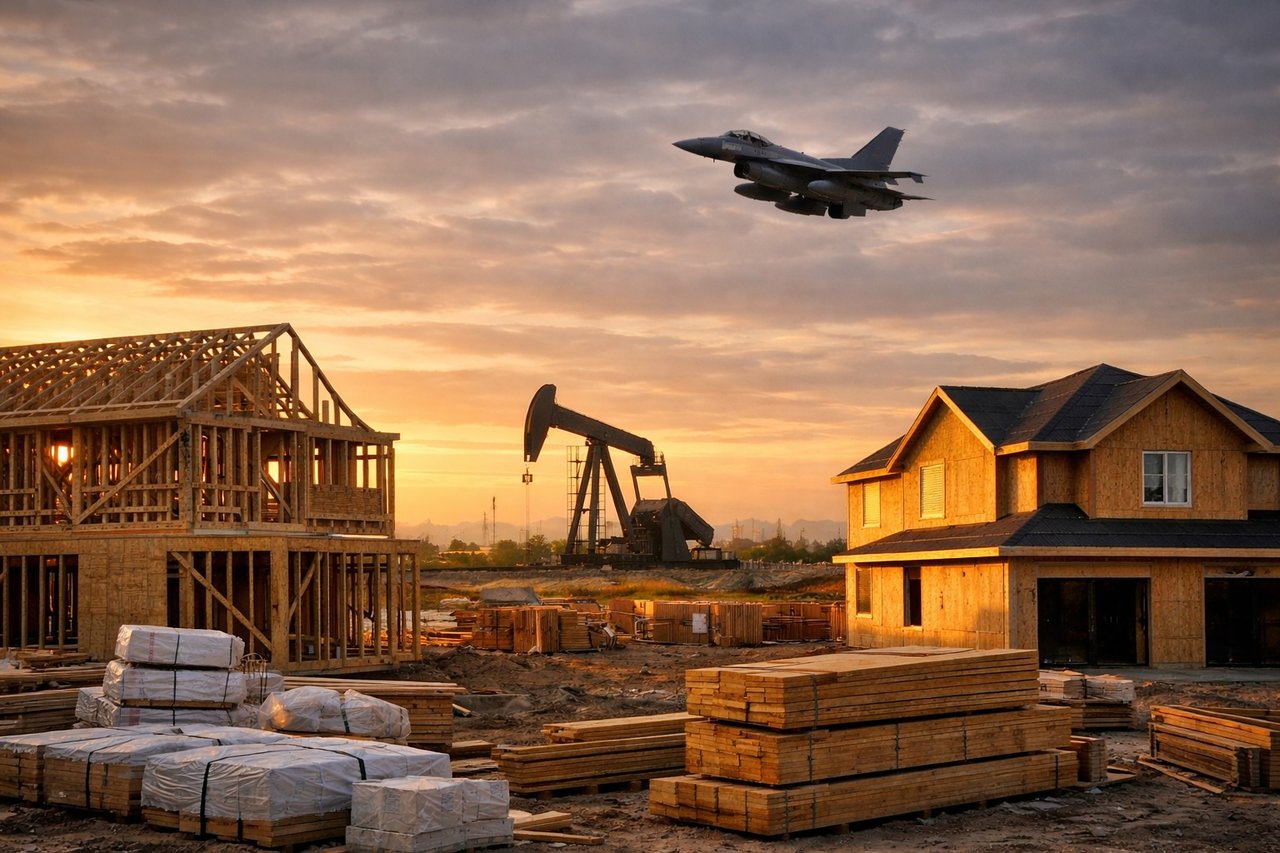
As the world edges another war and markets show renewed volatility, it got me thinking: what effect have wars historically had on housing?
I began to do some research. An hour later, looking back at roughly fifty years of U.S. conflicts, the pattern is surprisingly consistent.
The big lesson from history: war rarely crashes housing by itself. Instead, it works indirectly—through oil prices, inflation, interest rates, migration and construction shortages.
Understanding this chain reaction helps identify both opportunities and risks in the housing market. As I researched the past conflicts, here’s the economic path wars tend to follow:
- Oil prices rise: due to geopolitical uncertainty and supply risks
- Inflation increases: as energy costs ripple through the economy
- The Federal Reserve responds: by tightening monetary policy
- Mortgage rates rise: as borrowing costs increase
- Construction cost increase: due to supply chain disruptions and inflation
- Consumer confidence weakens: as uncertainty spreads
Housing is a slow-moving animal. It reacts less to headlines and more to the underlying economic forces. In other words: housing gets spooked by the feed (interest rates), not the noise (war headlines).
If tensions with Iran expand into a broader conflict, several likely effects could follow:
- Increased employment anxiety and economic uncertainty
- Rising inflation pressures
- Higher mortgage rates to fight inflation
- Higher gas and grocery prices (squeezing household budgets)
- Volatility is spooky: sentiment will rule above all and leave home buyers spooked about the unknown economy—hesitation will consume us.
The opportunities will come with existing homes appreciating over new construction—materials and labor will spike, driving new build prices up. Rental housing often strengthens as higher mortgage rates reduce affordability for homebuyers, pushing more to rent. Lastly, supply shortages can intensify which will cause costs to increase, construction to slow, and drive us deeper into a housing shortage already present.
What was interesting after researching the past wars was wars may rattle markets, but housing tends to respond to the conflict itself—but to the economic ripple effects that follow. And in many cases, those forces actually reinforce the long-term housing shortage.
To read more on each conflict I reviewed, see my summary of each below.
How Major Conflicts Have Affected Housing:
1973 Kom Kippur War (Oil Embargo) | Oil Shock
The war triggered the 1973 oil embargo, sending energy prices soaring. Inflation surged and borrowing costs rose sharply, putting pressure on housing affordability.
1979 Iran Revolution / Iran-Iraq War | Second Oil Shock
Another major energy shock pushed inflation higher, contributing to the high-interest-rate environment of the 1980s.
1990-1991 Gulf War | "Rates Whiplash"
Mortgage rates spiked around the invasion of Kuwait but quickly fell as the conflict stabilized and economic conditions changed.
2001 Afghanistan War / Post-9/11 Shock | Housing Wobbles
Home sales briefly dropped after the September 11 attacks due to uncertainty. However, the following low-interest-rate environment helped fuel the housing boom that eventually led to the mid-200s housing bubble.
2003 Iraq War | Financial-Market Fear Lowered Mortgage Rates
War uncertainty pushed investors into U.S. bonds, lowering mortgage rates and supporting housing demand.
2022 Russia-Ukraine War | Inflation Shock
The invasion contributed to global inflation and supply chain disruptions, pushing mortgage rates higher and increasing construction costs.
2023 Israel-Hamas | Oil Risk Premium
The familiar pattern reappears: oil price volatility feeds inflation expectations, which influences bond yield and mortgage rates. Rising costs slow construction while increasing the scarcity value of existing homes.
🔗 For more on housing and the Iran war, check out Market Watch