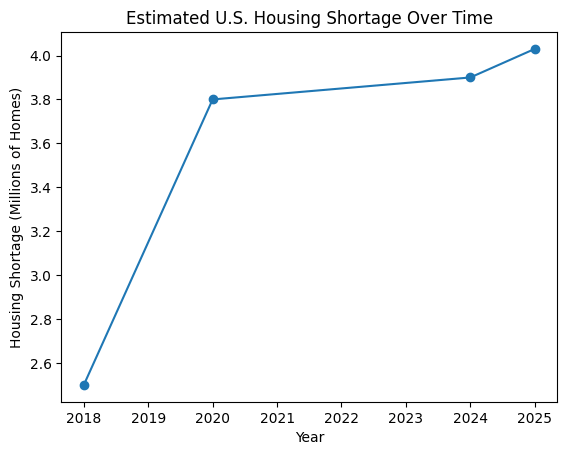
The U.S. housing shortage was already nearly 4 million homes when the pandemic began, and despite the construction boom that followed, the deficit has grown slightly to just over 4 million today.
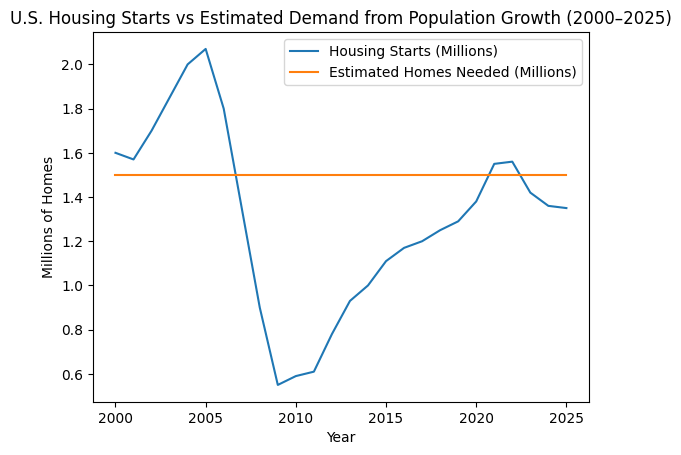
📸 ABOVE: the shortage had already started forming after a decade of underbuilding following the 2008 crash. Construction improved, but not fast enough to close the gap. Things get worse after the pandemic leaves labor shortages, land constraints, and high financing costs from the high rates preventing builders from building pace.
The problem isn’t going away. A related news summary citing Realtor.com data notes that 1.41 million households formed in 2025 while housing starts totaled about 1.36 million, widening the shortage further. And owners aren’t moving like the used to—something we need to keep housing stock cycling. When an owner buyers a new $600K house, they sell a $500K house to a $400K existing owner, and onward. But here’s another problem: home sellers been in their homes 8.6 years on average, longest time in data back to 2000 (when it was just 4.2 years).
But even with the problem growing bigger, there’s one big oversight. The shortage didn’t happen because builders stopped building during the pandemic. It happened because builders stopped building after 2008 and never caught up. Housing starts collapsed 72% during the financial crisis, and the industry spent more than a decade underproducing relative to population growth. That’s the real origin of today’s shortage.