We’re nearly a year into tariffs, and the real surprise hasn’t been price—it’s been timing.
To understand why, you have to appreciate how intricate a house really is. A single home is a global product. Lumber, steel, fasteners, appliances, lighting, plumbing fixtures, tile, glass, hardware—these components come from everywhere: China, Canada, Mexico, Turkey, Germany, Italy, Japan. A “local” home is anything but local.
Historically, labor has made up the largest share of construction costs, and that’s still true. But tariffs are shifting the balance. Material costs crept up almost quietly at first. The National Association of Home Builders estimates an average increase of roughly $8,000 per home, while some builders are seeing impacts closer to $15,000–$20,000 depending on finish level and product mix.
That number alone is meaningful—but it’s not the real disruption.
The biggest change I’ve experienced across nearly a year of active construction projects is availability.
Selections that once took days now take weeks. Lead times that were quoted as “a few weeks” quietly turn into months. And when you’re running a project schedule—especially one with financing, rate locks, or occupancy deadlines—months simply aren’t feasible.
Even when materials are ordered, the friction doesn’t stop there. Products get stuck in customs awaiting duty payments (this was terribly frustrating). Miss the timing window and the shipment doesn’t politely wait—it gets returned or delayed further. Pay the added expense, and you’re still dealing with extended logistics: ports, trucking, warehousing. What used to be a predictable delivery timeline now routinely adds weeks, sometimes a full month, after you thought you were in the clear.
This has forced a fundamental shift in how projects are planned.
Design decisions are no longer just about aesthetics or budget—they’re about supply chain reliability. For my clients, builders and designers, they're increasingly choosing materials not because they’re perfect, but because they’re available. That Italian tile? Gorgeous—but if it jeopardizes the schedule, it’s off the table. The custom light fixture? Amazing, but not if it stalls drywall and inspections (and daily interest accrue, often exceeding the cost of ordering something different).
The unintended consequence is subtle but important: timelines are stretching, flexibility is shrinking, and contingency planning has become a core design skill.
For homeowners and buyers, this means expectations matter more than ever. Build schedules need more buffer. Selections need earlier commitment. And the idea that you can swap a fixture or finish late in the process without ripple effects? That era is over—for now.
For me, tariffs didn’t break construction, but they did expose how finely tuned—and fragile—the system really is. And in today’s environment, the most valuable trait in construction isn’t speed or even cost control—it’s adaptability.
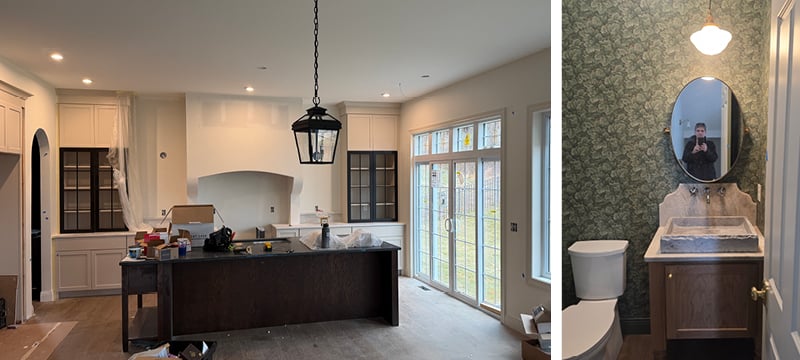
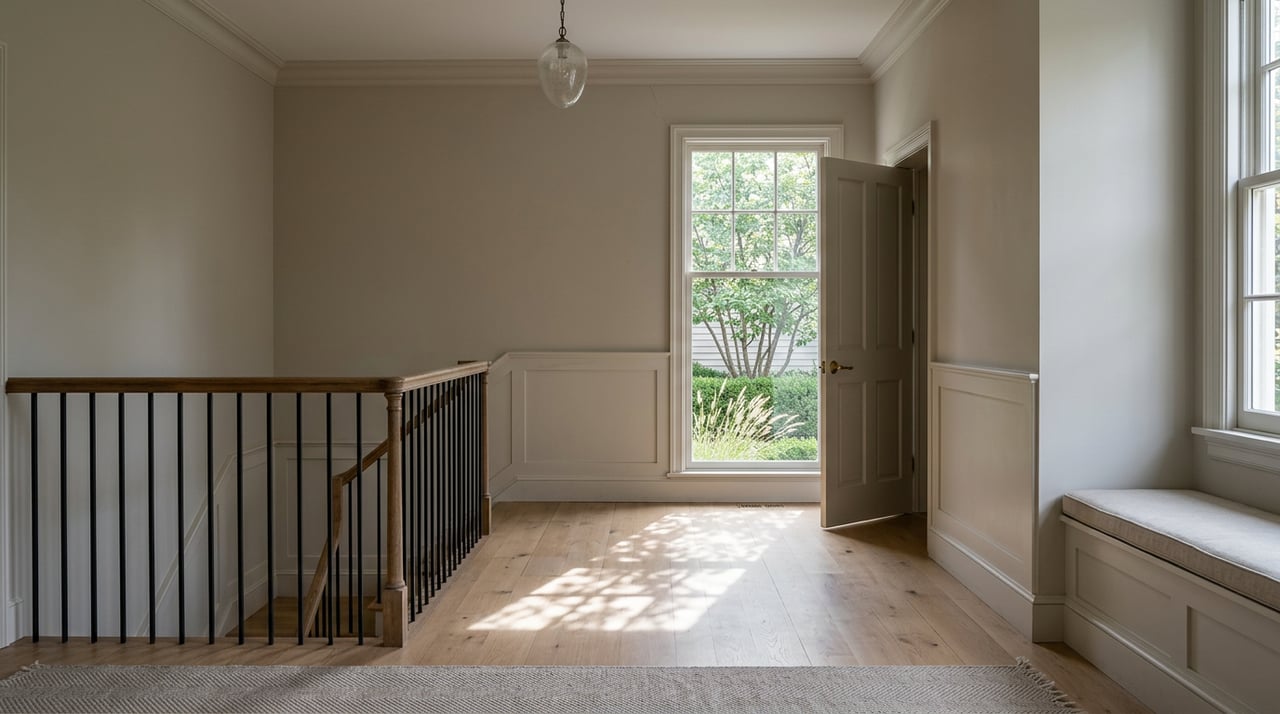
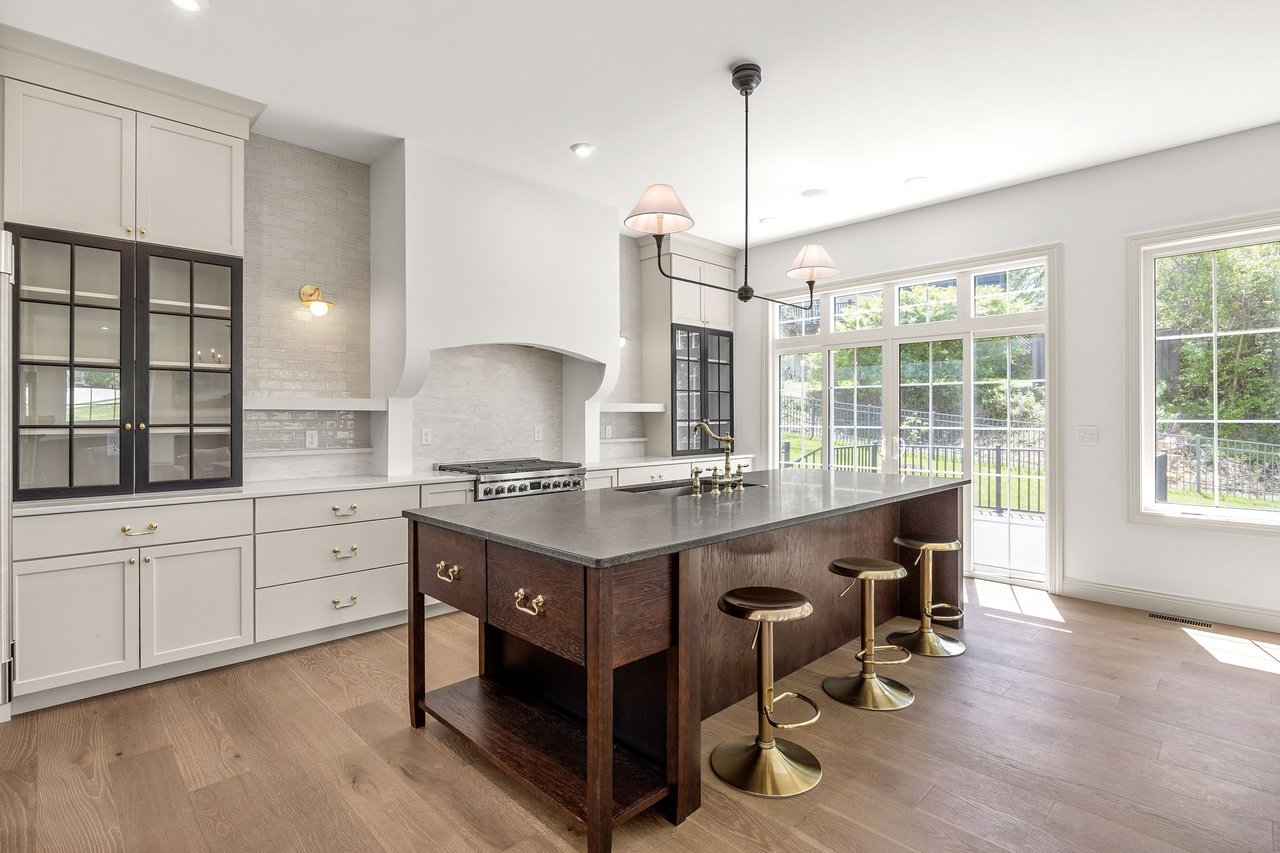
📸 This project sat stalled for three months—waiting on light fixtures stuck in backorder limbo at ports, tangled up in duty reviews and tariff delays. After 11 weeks, I finally waved the white flag and ordered a backup fixture… only for both fixtures to arrive on the same day. Naturally. The designer will be relieved—the original choice wins. The powder room wallpaper wasn’t spared either. Four revisions later, after one German manufacturer halted U.S. shipments due to tariffs and two others struggled with overseas order processing, we landed the final selection.