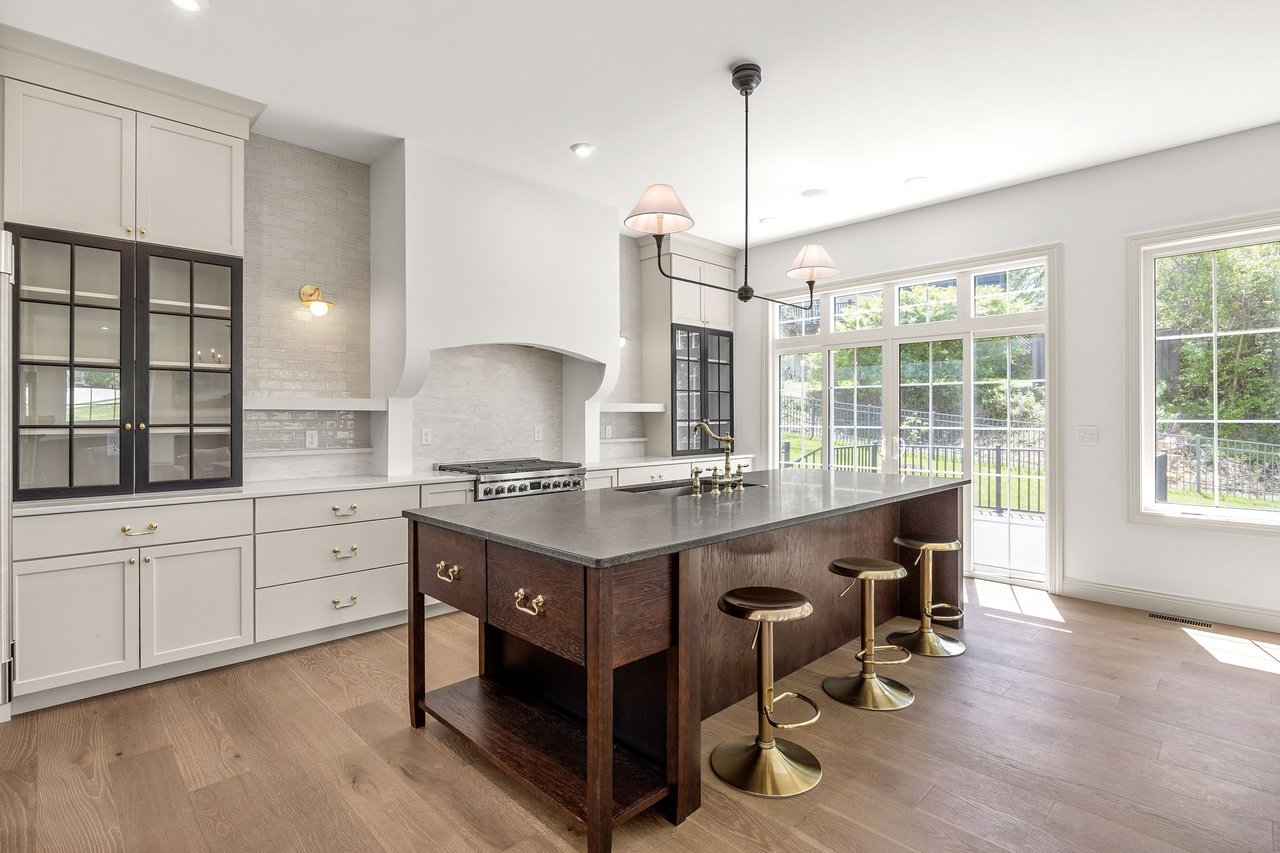
There are plenty of expensive ways to remodel a kitchen. You can could get new cabinets, new counters, appliances, flooring, or lighting. But there’s one design choice that's remarkably inexpensive: grab a screwdriver and change the hardware.
It might be one of the easiest updates you can make to a room—and also one of the easiest details to get wrong. Cabinet hardware used to be fairly straightforward: pick a knob, pick a pull, match the finish to the faucet, install the same thing everywhere, and DONE! That isn’t really how designers are doing it anymore.
Today you’ll see knobs mixed with pulls. Short pulls on smaller drawers and dramatically longer ones on wide drawers. Different hardware on upper cabinets than lower cabinets. Latches on glass cabinets. Backplates behind knobs. Cup pulls mixed with bars. Sometimes even different metals within the same kitchen.
Basically, cabinet hardware has become jewelry. And just like jewelry, proportion matters. A tiny pull on a huge drawer can look strangely undersized. An oversized handle on a narrow cabinet can look like someone installed a towel bar. And putting the exact same hardware on every single cabinet can make an otherwise thoughtful kitchen suddenly feel very builder-grade. The best kitchens increasingly treat hardware as part of the architecture rather than something selected at the end.
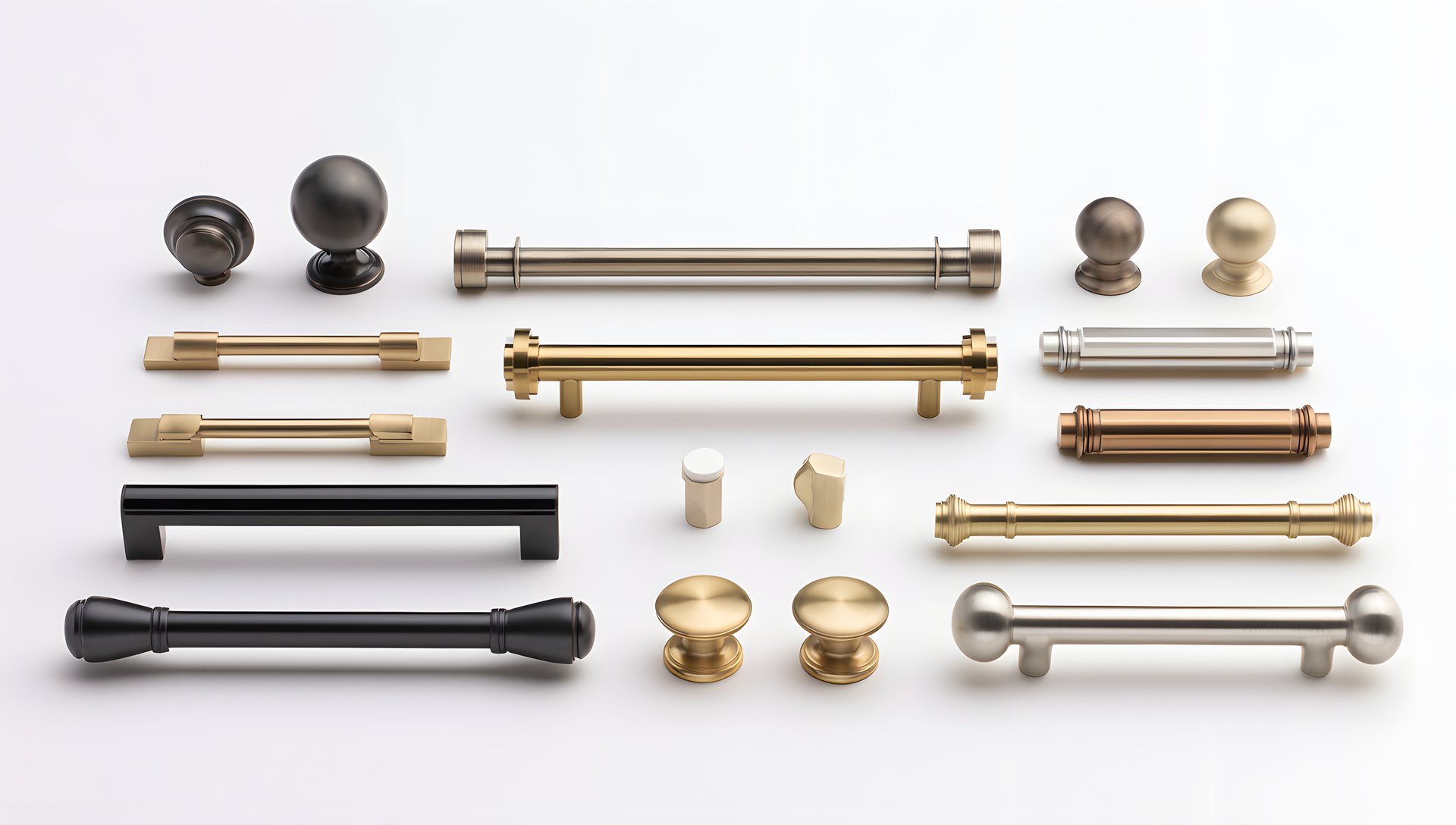
Okay, then there’s the price. There is an enormous amount of perfectly decent inexpensive hardware available today. You can order entire packages of knobs and pulls online for surprisingly little money, much of it mass produced overseas. And for some projects, that is completely fine.
But then you pick up really good cabinet hardware. Like heavy, solid, beautifully machined, and the kind where you hold one knob in your hand and briefly wonder whether it could double as a dumbbell or exercise equipment. That’s the one, and that hardware, that hardware has gotten expensive.
Twenty dollars for a single knob or pull is no longer unusual. Thirty, forty or fifty dollars happens quickly. Start looking at oversized solid-brass appliance pulls or long cabinet handles and suddenly one piece of hardware can cost $75, $100 or considerably more.
At first that sounds ridiculous. Then do the math. Most kitchens don't actually need hundreds of pieces. Maybe you need 25. Maybe 35. Spending another few hundred dollars on hardware in a kitchen where the cabinetry, appliances and countertops may represent tens of thousands of dollars can be one of the highest-impact upgrades in the entire room. Especially because you touch it every single day!
There is also something noticeably different about solid hardware. The weight, the finish, and the way the edges feel in your hand. Cheap hardware can look very good in photographs, but the tactile difference becomes obvious the moment you use it. And houses are tactile. We obsess over how countertops look, but we touch cabinet hardware considerably more often.
One of the bigger changes in interiors is that finishes no longer need to match perfectly. Your faucet can be polished nickel while your cabinet hardware is brass. Your lighting might introduce another metal entirely. A black range can live alongside bronze hardware. The goal isn't necessarily matching—it is making the finishes feel intentional together. The same applies to hardware styles!!
You might use knobs on cabinet doors and pulls on drawers. A wider drawer might get a longer pull while a narrow drawer gets a smaller version. A glass cabinet might get a latch rather than a knob. Done well, the variation makes cabinetry feel custom. But, done poorly, it looks like you discovered the clearance bin at three different hardware stores.
This is perhaps why cabinet hardware deserves more attention than it gets. Not everyone needs—or wants—a $100,000 kitchen remodel. Sometimes the cabinets are perfectly fine, the vanity is fine, the built-ins are fine….yet, they're simply dated. Changing hardware can completely alter their personality.
Traditional cabinets can suddenly feel more contemporary with long, restrained pulls. Plain cabinetry can gain character with aged brass knobs and backplates. A bathroom vanity can look considerably more expensive simply by replacing lightweight builder hardware with something heavier and better proportioned.
Think about it this way, you can do the same thing with furniture. A basic dresser with great hardware can suddenly look custom. An older built-in can feel intentional again. Even a laundry room can get an upgrade without ripping out a single cabinet. Paint and hardware together can almost become a miniature renovation.
There are places in a remodel where I think saving money makes complete sense. Cabinet hardware usually isn't one of them. You don't necessarily need the most expensive option available. But buy one sample before ordering everything. Hold it. Feel the weight. Look at the finish in your actual room. Make sure the scale works with the cabinet. Because this is one of those tiny details that somehow has an outsized influence on whether a room feels inexpensive or beautifully finished.
And if you're debating the $8 pull versus the $25 solid-brass one, remember this: you're probably going to open that drawer thousands of times. Might as well enjoy it.