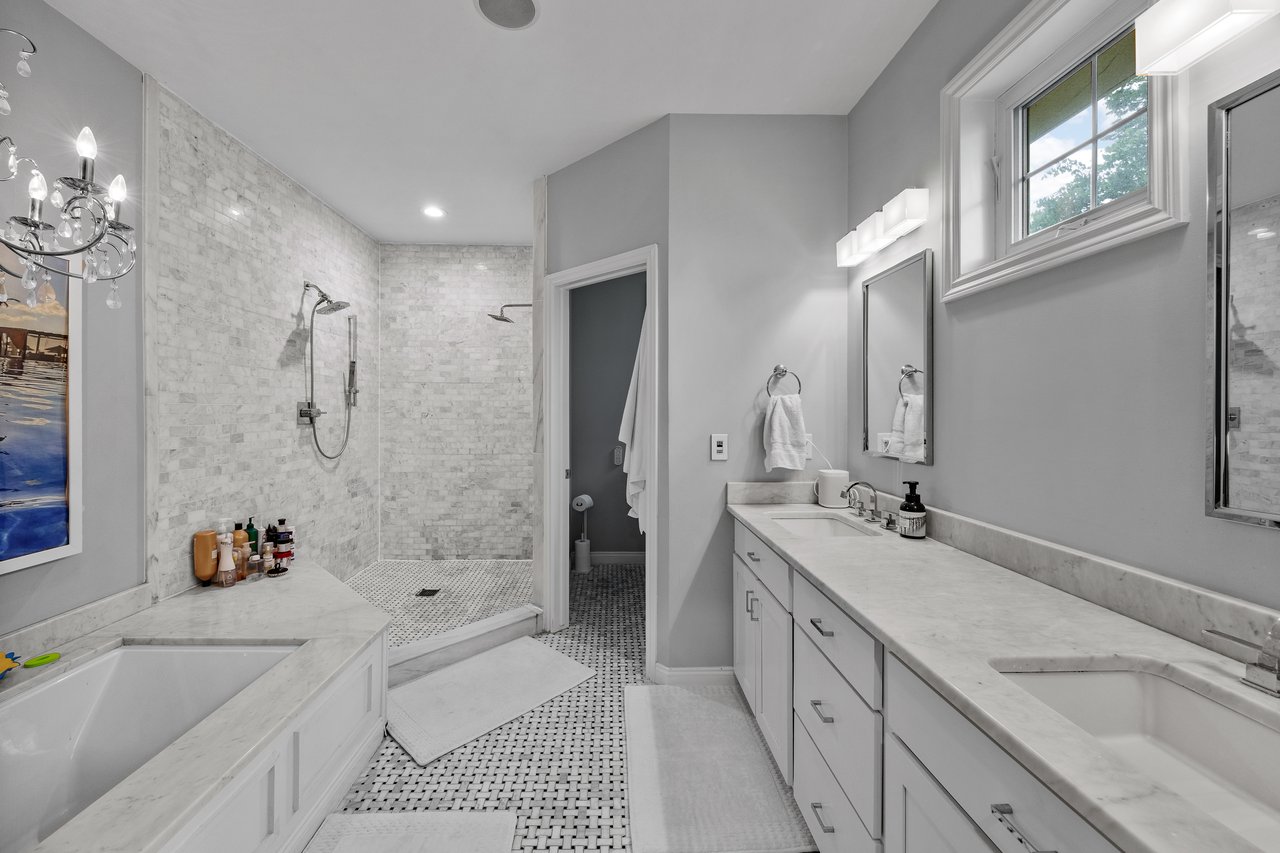
Marble is suddenly everywhere. It’s becoming hard to find a room that isn’t embellished with it. So why now? Why, after so many years of avoiding marble because it stains, scratches, and requires maintenance…are we returning to this classic material? Here’s why.
What makes marble feel timeless is its history (yep, me and history background…let’s go!). The ancient Greeks extensively used marble for temples, monuments, and sculptures because it could be carved precisely and polished until it reflected light. Then came the Romans, who used it in flooring, columns, wall panels, fountains, and bathing rooms. Marble wasn’t just a building material. It became a visible declaration of wealth, power, and status.
The Renaissance renewed interest in Greek and Roman culture, bringing Italian marble into grand staircases, fireplaces, floors, sculptures, and architectural detailing. That continued through Neoclassical, Georgian, and Victorian interiors. Over time, marble became unmistakably associated with luxury. One could argue that today’s marble-covered kitchen is essentially…a miniature Roman palace. Maybe that’s a stretch. But it’s fun to think about.
So why is marble trending again now? I believe homeowners are finally embracing imperfection. For years, we wanted surfaces that looked flawless and stayed that way. Quartz became popular because it was consistent, predictable, and difficult to damage. Marble was often dismissed because it could etch, stain, scratch, and develop a patina.
But our interiors are changing. We’re moving away from cool gray rooms and factory-perfect finishes. We want natural wood, aged brass, handmade tile, plaster walls, vintage furniture—and materials that reveal where they came from. Marble fits perfectly into that movement because no two slabs are identical. The veining is unpredictable. The color varies. And yes, it changes as you live with it. That once felt like a flaw. Now it feels authentic.
Today’s luxury isn’t necessarily about a material remaining perfect forever. It’s about choosing something real—something with history, variation, and the ability to age beautifully. The stains, etching, and patina aren’t always damage. Sometimes, they’re simply evidence that a home has been lived in. And perhaps that is why marble has returned. Not because we suddenly forgot it requires maintenance—but because we’ve decided beauty might be worth maintaining.
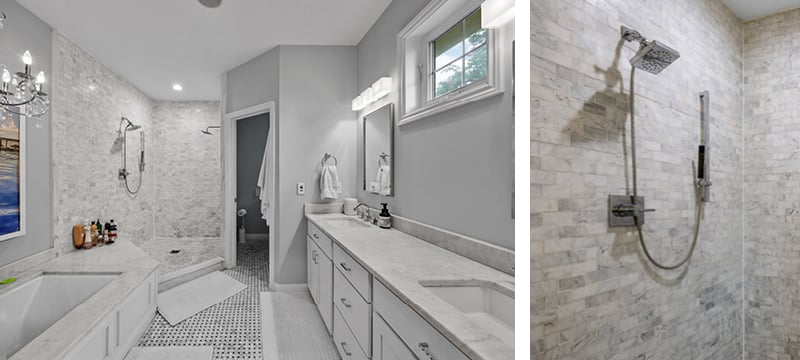
📸 My bathroom features marble tile floors, marble countertops, and a marble-tiled shower. Perhaps nowhere are marbIe’s imperfections more evident—or more beautiful—than in a bathroom, where more than fifteen years of subtle staining, etching, and patina tell the story of a home that’s been lived in.