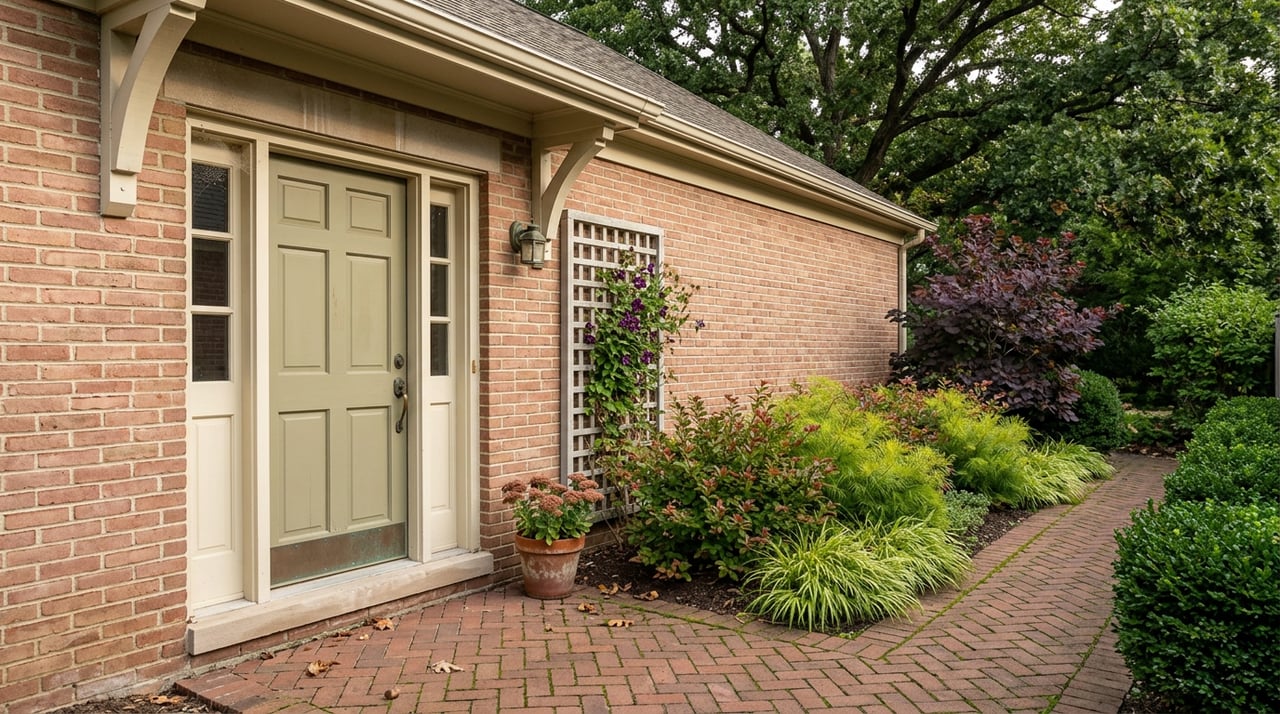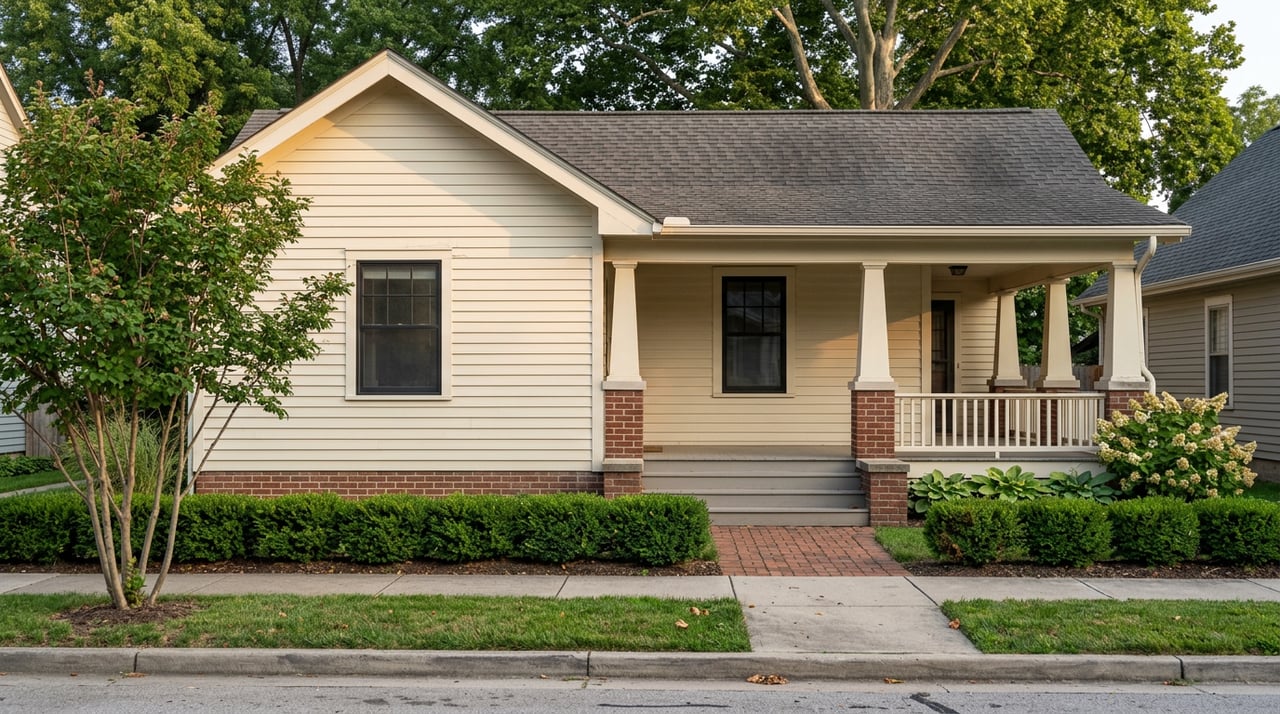
Drive in off Foster Road and you already know something is different. There is one way in and one way out, no strip of shops waiting at the entrance to announce where you've arrived, no corner store to orient you. For a neighborhood modeled after towns built specifically to have a downtown, that absence is easy to notice and just as easy to explain away as an unfinished plan. It isn't unfinished. The civic life the Peninsula's designers imagined happening on a commercial street happens here too. It just moved into the parks.
A Town Plan Without Its Town
The Peninsula Neighborhood was planned by the City of Iowa City with input from local residents, built on the same New Urbanism principles that shaped Seaside and Celebration, the walkable prototype towns on the Gulf Coast and in Florida that popularized front porches, shared green space, and a mix of housing types on a compact footprint. Those two towns became famous partly because their retail cores filled in: a main street with shops, cafes, a place to run into a neighbor without planning to.
The Peninsula's version of that commercial core stayed small. Today the neighborhood supports a single restaurant open evenings, Monday through Saturday, a hair salon, and a couple of small fitness and movement studios, according to the neighborhood's own business listings. That's a fraction of what the original template called for. The result isn't a neighborhood short on community infrastructure. It's a neighborhood where that infrastructure runs through parks instead of storefronts, which changes how you'd actually use the place if you live here rather than just drive through it.
The Block Party Is the Nearest Proof
The clearest evidence sits on the neighborhood's own calendar. The Peninsula Neighborhood's community page lists a recurring mid-August gathering, the Peninsula Block Party, an afternoon of "games, raffles, music and food." Check the page directly for this year's exact date and hours before you plan around it, since the listing changes from year to year.
Notice where that isn't happening. It isn't hosted at the restaurant or a business patio, because there isn't enough commercial square footage in the neighborhood to hold it. It happens on shared common ground, the same kind of green space the original plan set aside as a substitute for a town square. If you've lived here more than a summer or two, you already know this is the version of a block party the Peninsula runs on: no vendor booths, no ticketed entry, just the neighborhood using the ground it was actually given.
The Dog Park Has More Zoning Than the Neighborhood Does
The clearest example of that substitution sits at 1867 Foster Road. Thornberry Off-Leash Dog Park opened in 2006 as an 11-acre park inside Peninsula Park, and unlike the single continuous loop the neighborhood's streets were drawn on, the dog park itself is broken into four distinct rooms:
- The Linder Tire Service Small Dog Yard, reserved for dogs under 18 inches at the shoulder, with a paved path to its own shelter
- Emma's Run, a large open area for dogs that don't do well around others, where leashed individual or group training is allowed
- Lucky Pawz Playground, the largest section, with paved paths and two shelters with benches
- Lily's Pond, a separately fenced pond area for dog swimming when weather permits
That's more internal spatial variety than the surrounding residential blocks ended up with. The neighborhood plan promised a mixed, walkable grid and delivered a single access road. The dog park, almost by accident, delivered the subdivided, purpose-built rooms that New Urbanism plans usually reserve for a town center.
There's a practical wrinkle worth knowing if your tag lapsed over a quiet spring. Entry requires a current City of Iowa City Animal License, and a missing park permit tag carries a $100 fine per offense. Tags are available at the Iowa City Animal Care and Adoption Center, the Robert A. Lee Community Recreation Center, or at the dog park itself when staff is present. It's a small piece of friction, but it's the kind of detail that only shows up once you've actually needed to renew one.
The Trail Does the Work a Street Grid Would Have Done
Because the Peninsula has one road in and no interior street connection to its neighbors, the paved Iowa River Trail carries weight a sidewalk network would carry somewhere else. The trail threads through the neighborhood and crosses a pedestrian bridge over the old Iowa River Power Dam before continuing south toward Manville Heights, which means the fastest way to get from the Peninsula to Manville on foot or bike isn't a road at all. It's the river.
Near the neighborhood's southeast corner, that same trail passes close to Iowa City's skatepark, another piece of shared recreation infrastructure doing the job a second commercial block might have done in a different plan. None of it requires a car to reach, which is the point. The trail isn't a recreational extra layered on top of the neighborhood. It's the connective tissue the single access road never provided.
What Late Summer Actually Looks Like Here
Put it together and the picture is less about scattered amenities and more about one running theme: the Peninsula didn't build a commercial main street, so its parks, trail, and dog park absorbed the job a downtown would normally do. The Block Party is the clearest recurring event on that calendar. The dog park's four internal zones are the clearest built evidence. The trail crossing toward Manville Heights is the clearest proof that this neighborhood's connective tissue was never meant to be a road.
For residents, early August is a good moment to check on all three at once. It's worth confirming the Block Party's date directly on the neighborhood page before you plan a weekend around it. Dog park permits bought back in January are now seven months old, worth a check before a Saturday trip gets turned around at the gate over an expired tag. And the trail is still in its clearest, driest stretch of the year before fall brings University of Iowa foot and bike traffic back through the corridor toward downtown.
None of this requires a plan to move or a reason to compare listings. It's just what living inside a neighborhood built this way actually looks like in early August, once you know where to find the parts of town a main street would normally hold.
If you're weighing a change within the Peninsula, whether that's sizing up or sizing down inside a neighborhood you already know well, Adam Pretorius works this market closely enough to know which details matter and which don't. Request Your Home Valuation whenever you're ready to see what your specific address is worth in today's market.