For much of the late 20th century, built-in bookshelves were, well, everywhere. Bookshelves were a hallmark of home design. Living rooms, studies, and family rooms often featured walls lined with open shelving filled with books, collectibles, and family photos. Today, those shelves are quietly disappearing.
Shelves are ancient (yes, history lesson—I love history), but bookshelves became meaningful because books were expensive, scarce and symbolic. In other words, the earliest bookshelves was not “cute decor.” The bookshelf becomes a social signal. It said, “this household reads, travels, collects, remembers, and has opinions.”
In the 19th century, the private library becomes aspirational. This continued through the late 1800s to early 1900s where the built-in bookshelf gets especially useful in the American Home. The Arts and Crafts movement made built-ins feel useful and architecturally integrated rather than just furniture pushed against a wall. The idea of a home library spread as books because mass-market objects.
The bookshelf shifted in the 1970s-1990s to family rooms and studies where it became a hybrid: part library, part entertainment center, and part trophy case. The bookshelf was still useful because homes still were full of physical media. Records, cassettes, CDs, VHS tapes, DVDs, photo albums, and encyclopedias all needed visible home.
Then came Netflix, launched in the U.S. in 2007 which pushed streaming into our homes. The average disc sales fell at an average of 10.3% per year. At the same time, e-readers and tablets entered the mainstream.
Next came the storage craze. Netflix’s “Tidying Up with Marie Kondo” aired in 2019 and centered on clearing clutter and choosing what to keep. More series including “Get Organized with Home Edit” arrived in 2020, turning categorizing, containing, and beautifying clutter into a visual lifestyle product.
Though Netflix did not create the cabinet era, it helped make the cabinet era aspirational. By 2022, concealed storage became design language. Analysts from Houzz to NKBA’s Kitchen Trends to Better Homes & Gardens reported the end of open shelving, where homeowners stopped staying, “I need more shelves,” and started saying, “I need systems.”
The bookshelf used to prove you had a life. The cabinet now proves you have a system.
The bookshelf did not disappear because books disappeared. It disappeared because the household inventory changed. The late-20th-century bookshelf was really a display system for analog life: books, albums, discs, framed photos, souvenirs, trophies, stereo equipment, and family history. As media went digital and interiors became more open, photographed, and minimalist, homeowners began to value visual calm over visible abundance. The modern home still has plenty to store—perhaps more than ever—but the items have changed. Today’s clutter is not leather-bound novels and travel artifacts; it is Amazon packaging, air fryers, charging cords, dog food, school backpacks, sports gear, supplements, bulk paper towels, and the emotional support collection of Stanley cups. The result is a move from the bookshelf as identity display to cabinetry as lifestyle management.
The reason isn’t that people stopped needing storage—quite the opposite. Instead, homeowners are increasingly favoring concealed storage through custom cabinetry, built-ins, and multifunctional furniture. As physical media has given way to digital content and minimalist design continues to influence interiors, many homeowners prefer clean, uncluttered spaces where everyday items can be tucked away rather than displayed.
The result is a shift from showcasing possessions to concealing them. In many newer homes, the traditional bookshelf has been replaced by floor-to-ceiling cabinetry, sculleries, appliance garages, mudroom lockers, and integrated storage systems designed to keep visual clutter out of sight. Homeowners still need storage—they just don’t necessarily want to look at it.
My observation: Twenty years ago, homeowners wanted places to display their collections. Today, they want places to hide Amazon purchases, charging cords, dog food, kids’ toys, and air fryers.
The bookshelf isn’t dead. It’s simply been promoted to cabinet duty. (ya, I just did that!)
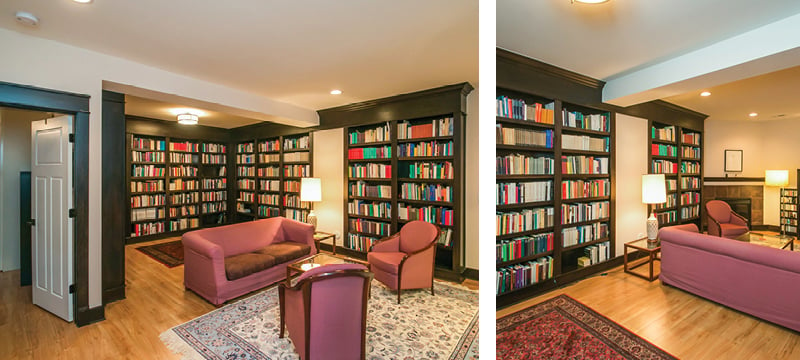
📸 Top, beautiful custom bookshelves installed in this 2009 new build are stunning craftsmanship. After the initial owner, they were all removed.