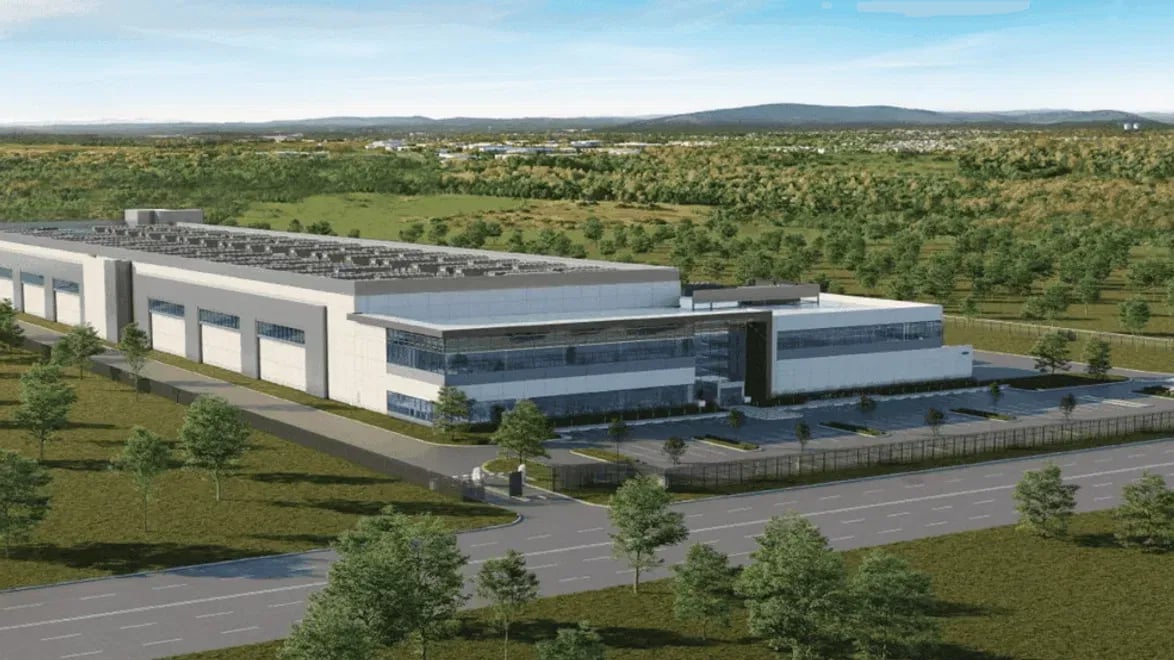
I ran into my electrician at Costco the other weekend. I hadn't seen him on any of my residential construction projects in over a year, so I asked where he'd been. Turns out, he's been busy building data centers. Yep, all those enormous buildings being constructed to power artificial intelligence.
And apparently, he's not the only one. The Midwest has become a major destination for AI infrastructure investment, and right here in eastern Iowa, we're seeing billions of dollars poured into new data-center developments. Great news for construction jobs and our local economy. But here's what got me thinking: what happens when the companies building America's digital future start competing with those building America's homes?
There's a construction boom happening in America. It's just not the one we desperately need.
In 2022, before the explosion of generative AI, housing accounted for approximately 16.5% of the U.S. economy. Today, that's fallen to 15.8%, its lowest share since 2019. But here's the more troubling number: the actual business of building and improving homes, known as residential investment, has fallen from 7% of GDP in 2005 to just to just 3.6% today—almost HALF its former share!
Meanwhile, data-center construction spending reached an annualized pace of nearly $85 BILLION in August 2026, up 73% from a year earlier! Think about that contrast. Housing construction is struggling, while the construction of enormous buildings to house computers is growing at an extraordinary pace! For every loser, there’s a winner. And while the homebuilding industry was once a powerful economic engine in the U.S., it has now practically ghosted the GDP.
Now, AI isn't necessarily responsible for housing's declining share of the economy. Mortgage rates and housing affordability were already causing trouble before ChatGPT even existed—I concede to this! But the two industries increasingly find themselves competing for the same resources. And that could become a much bigger problem for homebuilding.
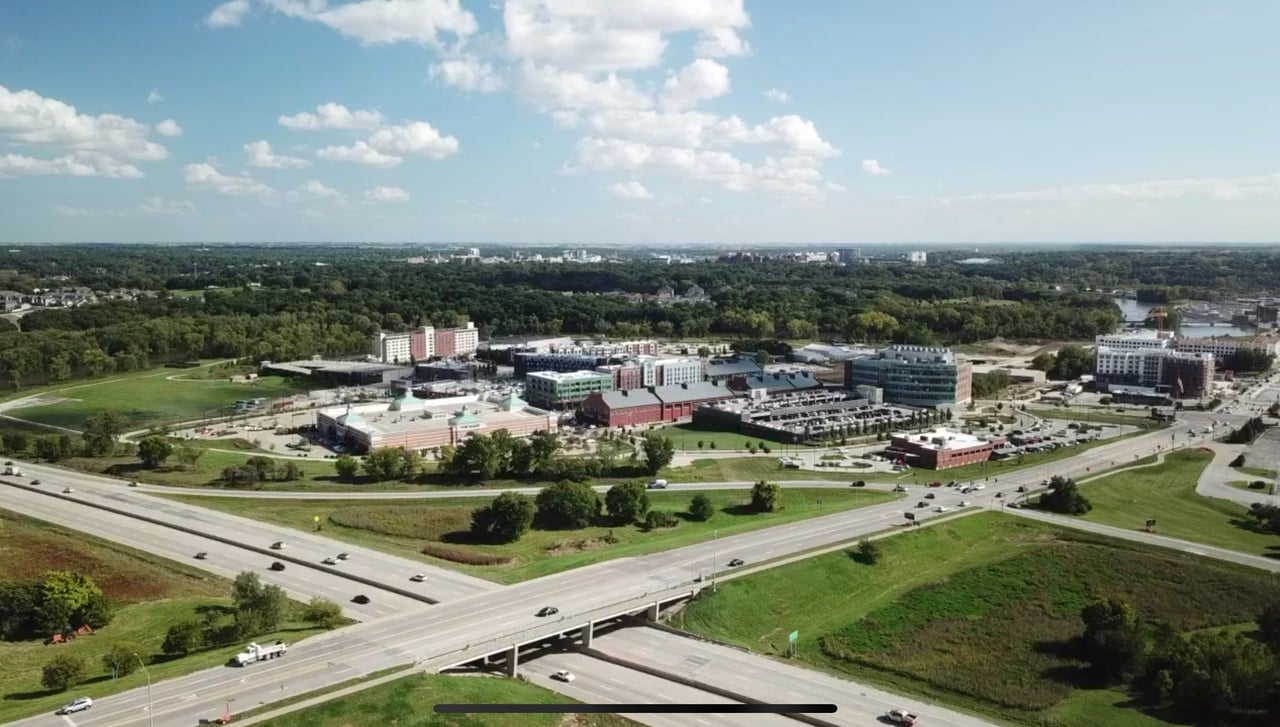
Okay, first, this isn't just happening in Silicon Valley. Consider what's happening right here...in eastern Iowa! Cedar Rapids has two enormous data-center developments underway or planned. Google is building a campus with an estimated investment exceeding $3.5 billion, while QTS is developing another with an estimated $4.5 billion investment. That's potentially $8 BILLION in projects just up the road from Iowa City. To put that into perspective, these aren't simply large warehouses full of computers. They require enormous amounts of electrical infrastructure, cooling equipment, concrete, structural steel and specialized workers.
And I'm hearing about the impact from more than just my electrician. My neighbor, who sells brick, stone and concrete, tells me the constant announcements of new data-center projects are putting additional strain on material pricing and labor availability. He says there simply is not enough material to supply the building demand.
Meanwhile, local rentals are being leased to contractors brought in from outside the area to work on these projects. In fact, one of those contractors is renting one of my own properties. He told me his assignment was originally expected to last a few years, but with new projects continually being added, he now thinks he could be here for five years or longer!
And he might be right. I was reading a new October study from the Common Sense Institute estimating another $38 BILLION in data-center investment across Iowa through 2031. That’s on top of an estimated $15 billion already invested! Think about that. We're not just talking about a temporary construction rush. We're potentially looking at years of demand for the same skilled workers and building materials that residential construction depends on.
Electricians, pipefitters, HVAC specialists, concrete crews...sound familiar? Those are many of the same trades and resources we need to build homes. We’re in a housing shortage and we need more residential building. And when multibillion-dollar technology companies are involved, the competition can become rather lopsided.
Oh, and remember gray paint? Ya, AI loves it. Here’s a funny side story I came across while researching the AI construction boom. Remember how gray paint dominated practically every new home and remodeling project throughout the 2010s? Gray walls, gray cabinets, gray floors. Everything gray! Then, almost overnight, designers started abandoning it in favor of warmer whites, creams, wood tones and natural colors.
Well, after a decade of oversaturation followed by several years of designers shunning it, gray paint has found an unlikely new customer: data centers. And they're buying a LOT of it. According to recent report I found in The New York Times, paint manufacturers PPG and Sherwin-Williams are benefiting from the enormous demand for specialized industrial coatings used in data-center construction.
Okay, the gray trend is funny but it's not necessarily the color these technology companies want. It's what the paint actually does. These facilities need coatings that protect structural steel from fire, prevent corrosion and reduce problems caused by static electricity around sensitive equipment. And apparently, gray is perfectly acceptable when the room is filled with computers instead of people. Ya, I’m a warm color fan.
Here's the staggering part: coating costs can run between $3 million and $8 million for a SINGLE data-center building. PPG expects its data-center-related paint sales to triple this year compared with last year, while Sherwin-Williams has reported strong growth in its performance-coatings business. Imagine that huh—a paint color that designers spent years telling us to abandon has found a booming second career protecting AI servers!
But the story isn't really about gray paint. It's about how deeply this AI construction boom is reaching into industries that traditionally serve buildings of all kinds. Paint, concrete, copper, steel, asphalt, electrical equipment and even gravel are benefiting from the demand. Which raises an important question: what happens to the cost and availability of those resources for everyone else?
Here's where the AI boom starts presenting a real challenge for residential construction. In September, a workforce survey revealing that, among contractors involved in data-center construction, 58% reported increased competition for skilled workers and 49% reported upward pressure on wages.
Think back to my electrician at Costco. He's not a hypothetical worker being recruited away from residential construction. He's someone I've actually worked with, who is now spending his time building data centers instead of houses. And can you blame him? These enormous projects can offer higher wages, substantial overtime and years of scheduled work ahead. But losing an experienced electrician doesn't just mean hiring somebody else tomorrow.
It can mean delaying rough-ins, which then delays insulation, drywall, cabinets, flooring and ultimately closing. I discussed this same domino effect in my story about immigrant labor and its importance to housing. Construction projects depend on a complicated sequence of specialized trades showing up at exactly the right time.
One missing subcontractor can push back an entire project. And for builders carrying construction loans, every additional month means more interest expense, insurance, property taxes and holding costs. Those costs eventually get absorbed somewhere. Often, by the homebuyer.
Okay, so what next? Well, the cost of materials. Think about how much copper, steel, concrete and electrical infrastructure goes into a single massive data center. Now multiply that by the number of facilities being built across the country.
Demand for transformers, electrical switchgear and sophisticated HVAC equipment has been particularly intense, with lengthy manufacturing lead times for some components. And while the equipment used in a data center isn't necessarily identical to what goes into a house, the industries can share manufacturers, materials and skilled labor.
It's not that Google is buying every electrical panel at the local supply house. It's that the sheer scale of demand can stretch parts of the supply chain, contribute to higher prices and make it more difficult for smaller projects to compete. Housing was already struggling with construction inflation, tariffs and an aging skilled-trades workforce. The AI boom adds another potentially expensive variable.
Oh, and…here’s the bigger issue: money. This part might be the most interesting. And, if you’re a builder, the most frustrating.
We're watching technology companies commit extraordinary amounts of capital to build AI infrastructure at the same time that housing is struggling with elevated borrowing costs. When an enormous new industry demands more labor, equipment, electricity, construction capacity and investment, those resources have to come from somewhere. If investment demand increases faster than available savings, the cost of capital can rise. And few industries are more sensitive to borrowing costs than housing.
A small increase in mortgage rates can make the difference between a buyer qualifying for a home and sitting on the sidelines. Similarly, higher construction financing costs can turn a profitable development into one that simply doesn't make financial sense. And the housing affordability issue? It’s largely a product of lack of housing supply. If developers are sidelined for AI investments, that’s an inventory issue 5-10 years from now. If builders are sidelined for AI investments, that’s an inventory issue for the immediate year as construction takes 6-12 months.
I'm not suggesting AI is the reason mortgage rates are high. Sure—inflation, Fed policies, government borrowing and the bond market all play a part. But we're beginning to see a new economic question emerge: can an enormous AI investment boom make it even harder for other industries to finance the things they need to build? For housing, that question matters.
So, is AI bad for housing? Nope, not necessarily! These investments do bring jobs, economic activity, tax revenue and new infrastructure. And in places like Iowa, large data-center developments can be an enormous opportunity for local contractors and skilled tradespeople. And I'm seeing the upside firsthand, too. One of my rentals is occupied by a contractor who's here specifically because of these projects. That creates real income for local property owners, supports businesses and brings additional economic activity into our communities.
They may even create additional housing demand as more workers arrive and regional economies expand. That's the positive side of the story. But there's another side that I think deserves more attention. America already has a housing shortage. We need more homes, more construction workers and more investment in residential development.
Yet we're simultaneously asking our construction industry to build an extraordinary amount of technological infrastructure, often using some of the same people, equipment and materials. For years, we've blamed the housing shortage on zoning, permitting, land costs, regulations and mortgage rates. All (still) legitimate issues. But perhaps we're entering a new chapter where we need to consider something else: housing is no longer competing just with other housing projects for the resources needed to build.
It's competing with the AI revolution. And while the technology industry is racing to build the infrastructure of tomorrow, the housing industry is still struggling to build enough homes for people to live in today. America isn't running out of things to build. We're running into limits on how much we can build at once.