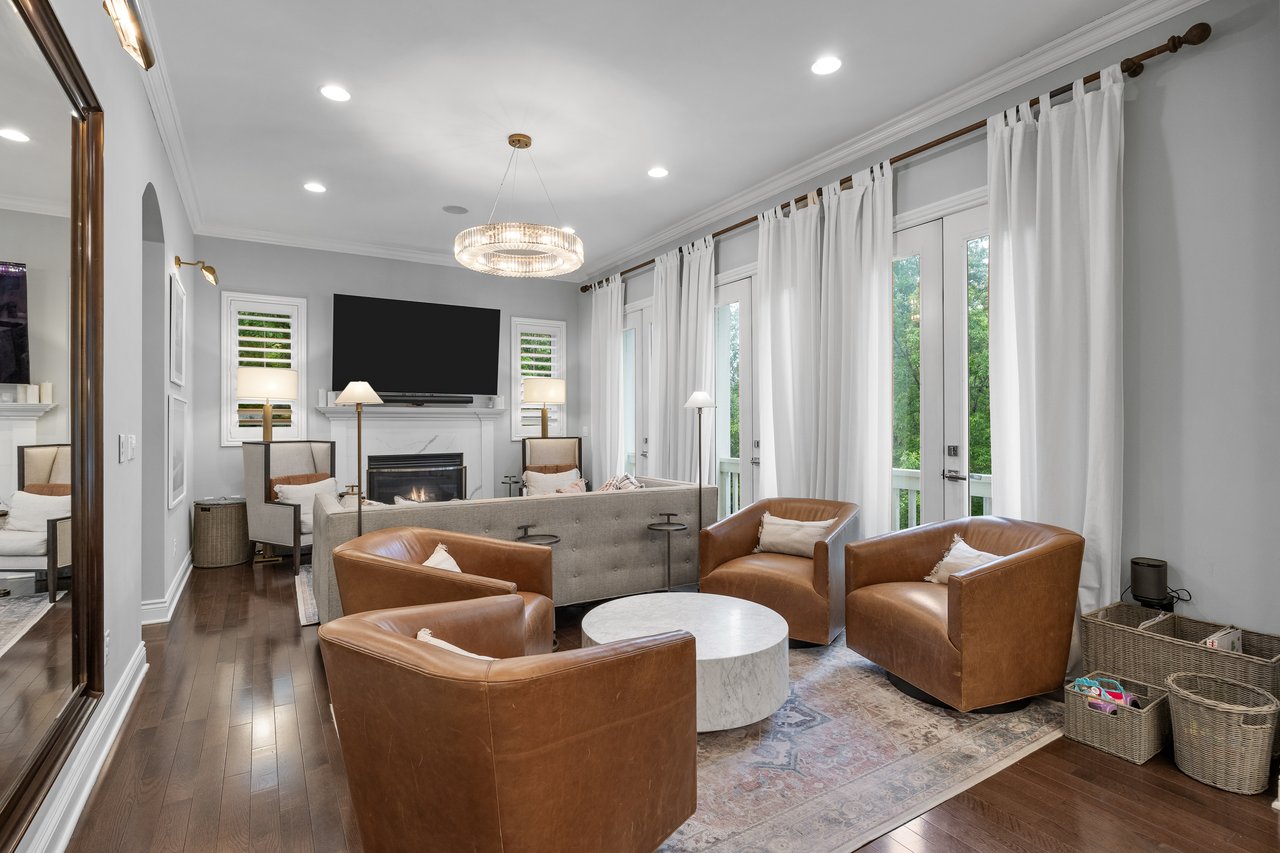
There is a major shift happening in interior design, and this trend may be the clearest sign yet that we are moving away from “single-purpose showroom rooms” and back toward true living spaces. The plural is intentional—homes are becoming more layered.
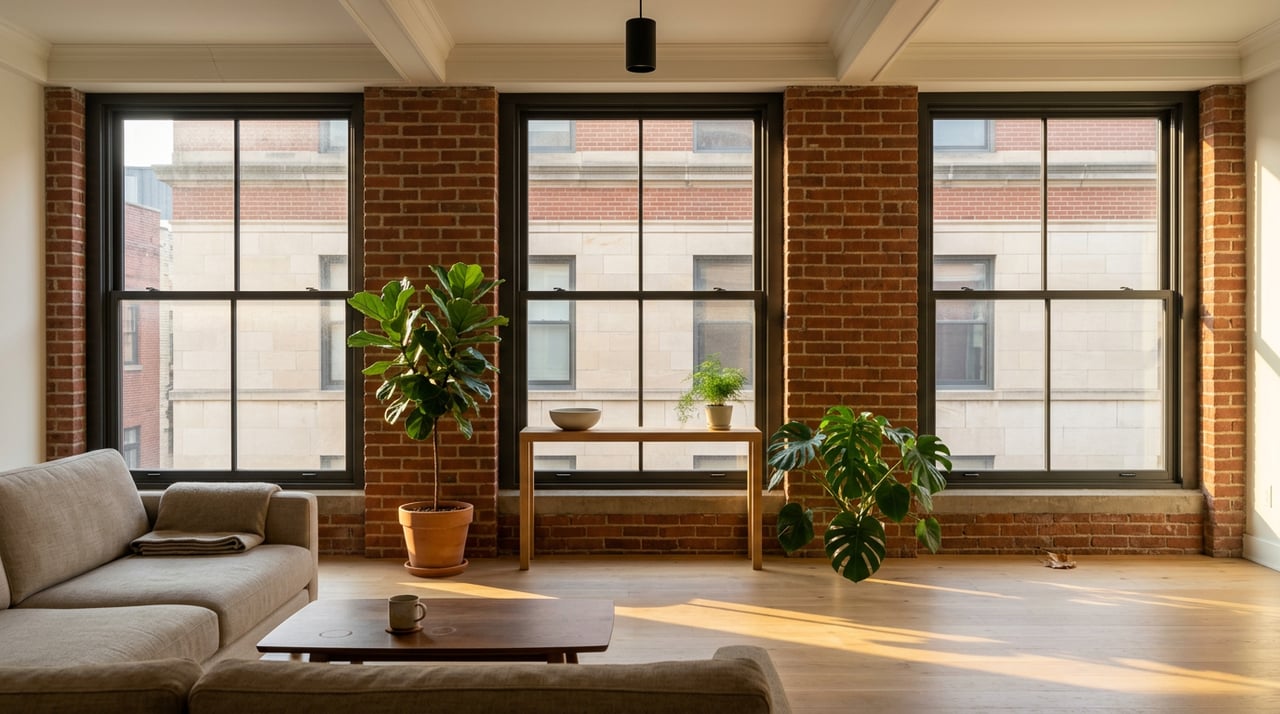
The era of the living room as simply a “TV watching station” is fading. Designers are now using words like “layered,” “conversation-focused,” and “collected” as they create more intimate seating arrangements, layered furniture layouts, and spaces centered around interaction. The feeling is less furniture showroom and more boutique hotel lobby.
To become your own designer, start with a “conversation zone.” Use modular furniture, low-profile seating, inward-facing layouts, rugs that define separate “rooms within rooms,” and furniture pulled away from the walls to create movement and intimacy.
Here’s an easy formula: sofa + swivel chairs + reading chair + game table + secondary conversation area + layered lighting. Try incorporating as many elements as your space comfortably allows.
What no longer works as well is a single oversized sectional floating in an oversized room. Multiple furniture pieces create scale, warmth, and luxury. They also create movement—where different seating arrangements encourage different experiences: conversation, reading, entertaining, relaxing. And perhaps most importantly, layered seating softens the weaknesses of the open floor plan.
If you need inspiration, look at hotels. Hospitality designers are masters at creating layouts that feel inviting, social, and emotionally comfortable. A room still needs circulation, comfort, practicality, and visual hierarchy—but layered seating is what transforms a space from functional into experiential.
One perfectly placed swivel chair near a fireplace can do more psychologically than 400 square feet of empty room.