Ask anyone about housing affordability and you’ll probably hear the same things: home prices and mortgage rates. Fair. Both matter...a lot. But there’s another expense increasingly showing up in conversations with homeowners and buyers that doesn't get nearly the same amount of attention: homeowners insurance.
And here in Iowa, it's getting kind of crazy. According to LendingTree, homeowners insurance rates nationally increased nearly 47% from 2020 through 2025. Iowa? 96%. Nearly double!!
That puts Iowa second in the country, behind only Colorado, for the biggest increase in insurance rates during that period. And in 2025 alone, Iowa rates increased another 14.7%, compared with about 6% nationally.
So, while everyone has been obsessively watching mortgage rates move around by an eighth of a percent—and, yes, I'm guilty too—insurance has quietly become one of the fastest-growing costs of owning the house itself.
Okay, so 'why Iowa'?!? Well…have you lived here? Derechos, hail, tornadoes, windstorms and trees landing where trees are definitely not supposed to land. Iowa weather has become extremely expensive.
LendingTree found Iowa had a 118% insurance loss ratio, meaning insurers were paying out more in claims than they were collecting in premiums. That's not exactly a sustainable business model, so insurers have been adjusting what they charge—and increasingly, what they'll cover.
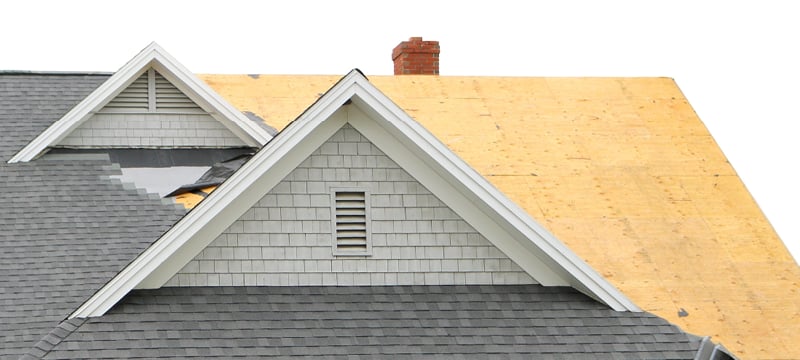
And roofs are probably the most obvious place homeowners are feeling it. For years, we've gotten accustomed to the idea that a big hailstorm rolls through, everyone calls the roofer and suddenly half the neighborhood has a shiny new roof courtesy of insurance.
That world is changing. Higher deductibles are becoming common. Some policies treat wind and hail differently. Older roofs may be insured at actual cash value instead of replacement cost, meaning depreciation gets subtracted from the payout. Other policies have specific roof endorsements that change coverage as the roof ages.
Translation: don't assume the insurance policy you bought years ago still means, storm damages roof = insurance buys me a new roof. It might not.
This is where I think homeowners need to change their thinking a little. Insurance is incredibly important. If your house burns down, a tree crashes through the living room or you have a major covered loss, that policy may be one of the most valuable things you own. But I've never thought of insurance as a maintenance plan for the house.
There's a difference between a catastrophic loss and automatically making a claim every time something gets damaged. Claims can become part of your insurance history. Insurers use a database called CLUE—Comprehensive Loss Underwriting Exchange—to see previous property losses when they're underwriting coverage. Think of it, very loosely, as the insurance industry's version of a property's history file. Claims don't magically disappear when you switch companies.
That doesn't mean don't file a legitimate claim. It means understand the deductible, understand the likely repair cost and talk with your insurance agent before assuming every problem belongs on an insurance claim. Sometimes the smartest financial decision may actually be paying for a smaller repair yourself. Welcome to homeownership: where spending $3,000 can occasionally save you money. Fun!
Alright, let's leave with optimism. What can you actually do? A few things.
👉 Raise your deductible—if you can comfortably afford it.
A larger deductible can reduce premiums. I personally like the idea of insuring against the stuff that would really hurt financially rather than every smaller loss. But obviously, don't choose a $10,000 deductible if coming up with $10,000 tomorrow would be a crisis.
👉 Shop your insurance regularly.
Don't assume loyalty is automatically being rewarded. Get quotes. Pricing varies dramatically between carriers, homes and even neighborhoods.
👉 Bundle home and auto.
This has made a meaningful difference for me personally. Ask what discounts are available before assuming the price you're quoted is the price you're stuck with.
👉 Ask about the boring stuff.
Security systems, monitored smoke detectors, carbon-monoxide detectors, newer mechanicals, impact-resistant shingles and other improvements may qualify for discounts depending on the carrier.
👉 And PLEASE understand your roof coverage.
Ask four questions: Is it replacement cost or actual cash value? Is there a separate wind/hail deductible? Does coverage change as the roof ages? Are there exclusions or endorsements I should know about?
Those answers suddenly matter today—a lot.
This isn't just a homeowner problem anymore. For buyers, insurance needs to become part of the affordability conversation before closing. Two similarly priced houses can have very different insurance costs depending on their age, roof, claims history and construction. Here's a fun example. A small town just twenty minutes from Iowa City had higher insurance premiums for car insurance than living in Iowa City. Why? Because the likelihood of hitting deer was greater in a small town than in an urban city! Location DOES matter!
For sellers, insurability can matter to the sale, too. An older roof that looks perfectly acceptable may become a problem if the buyer struggles to obtain reasonably priced coverage. And for all of us, it's another reminder that the mortgage payment isn't really the cost of owning the house. It's the mortgage...plus taxes...plus insurance...plus maintenance...plus the tree that apparently waited until you became responsible for it before deciding to die. Homeownership!
So yes, keep watching mortgage rates. I certainly am. But maybe take ten minutes this fall and actually read your insurance renewal, too. Check your deductible. Check your roof coverage. Call your agent and ask questions.
Because in Iowa we have a saying—or at least plenty of bumper stickers reminding us: Sh%t happens. Because, apparently, it's just considerably more expensive to insure against it now.